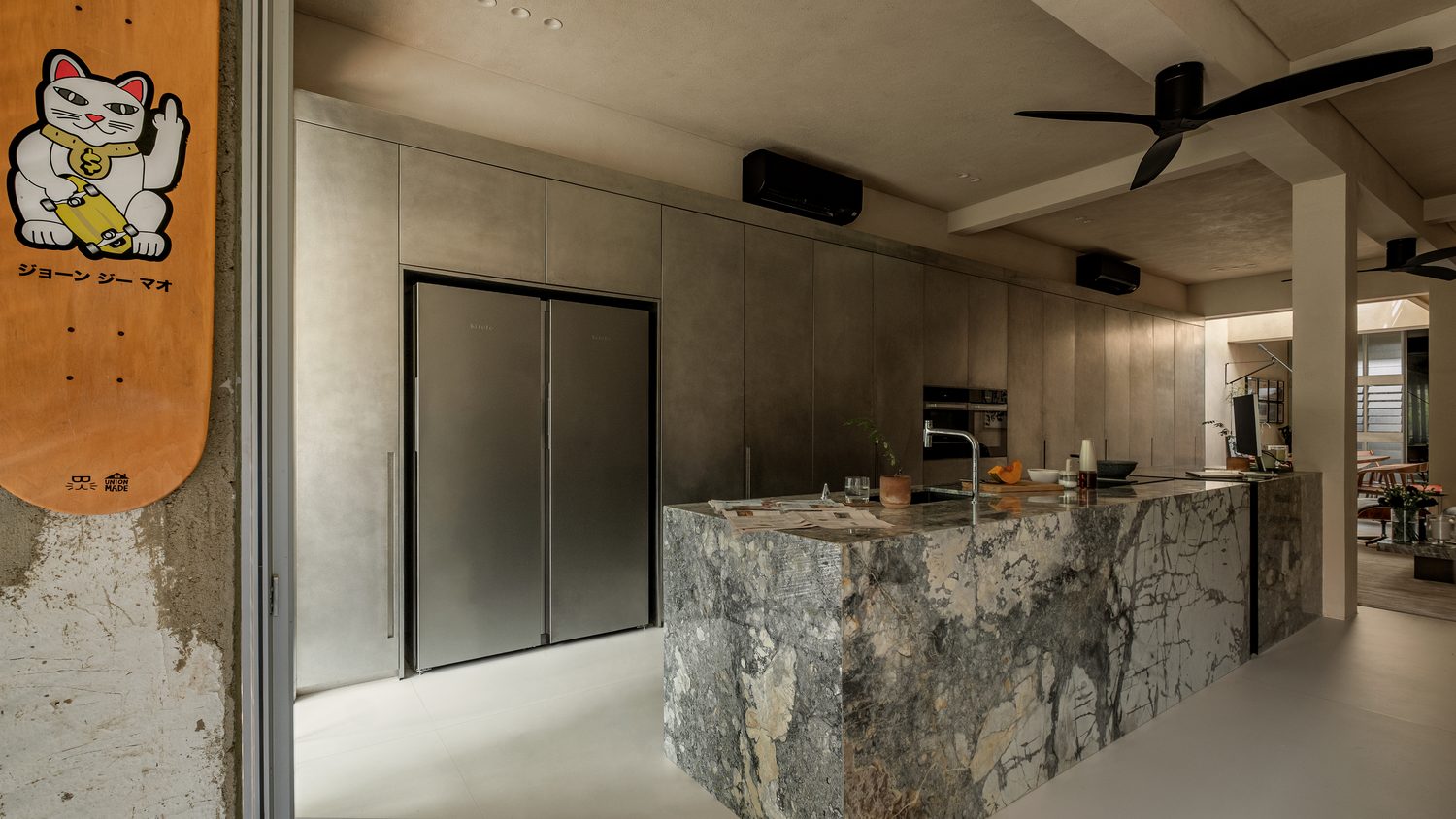
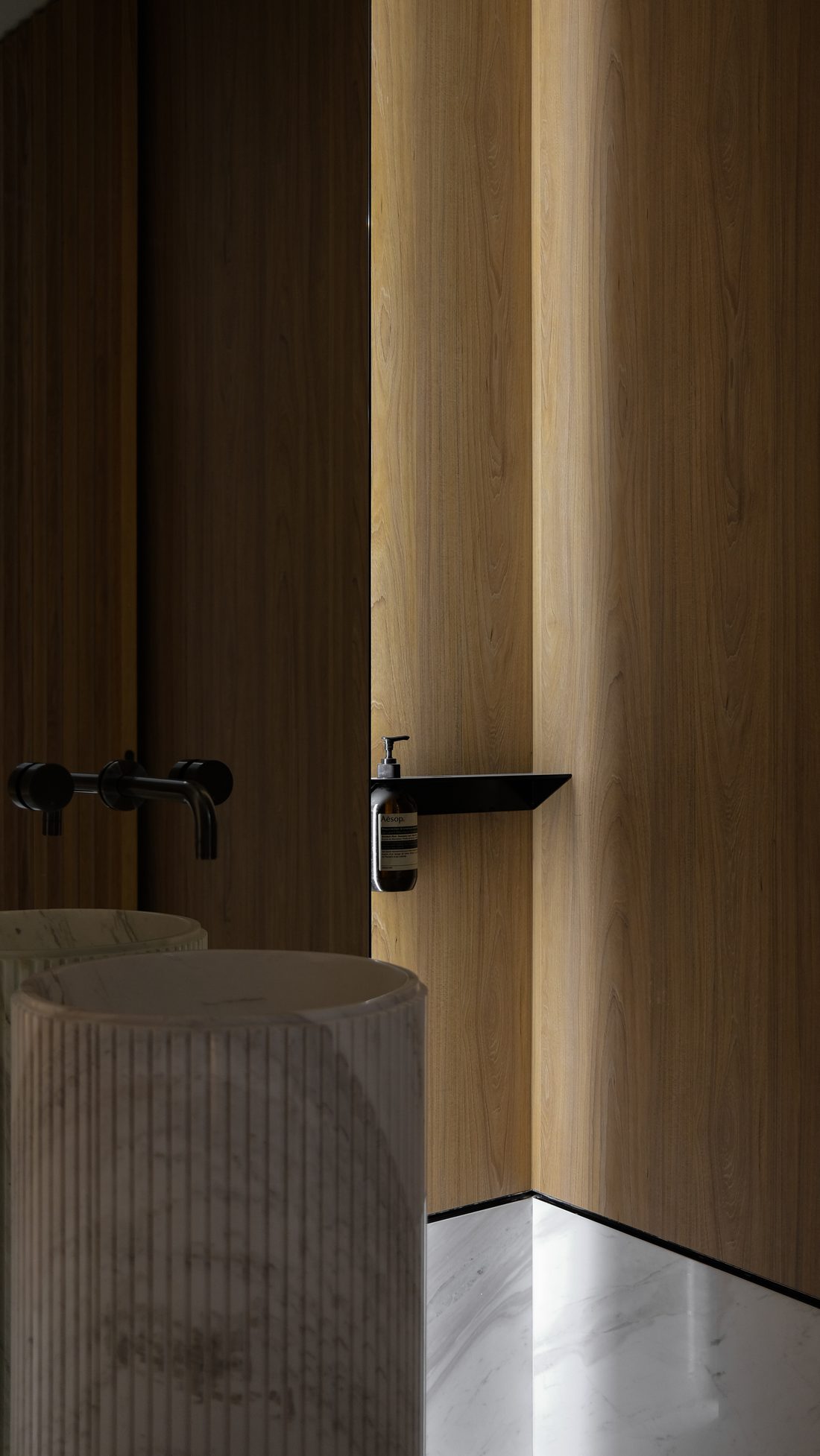
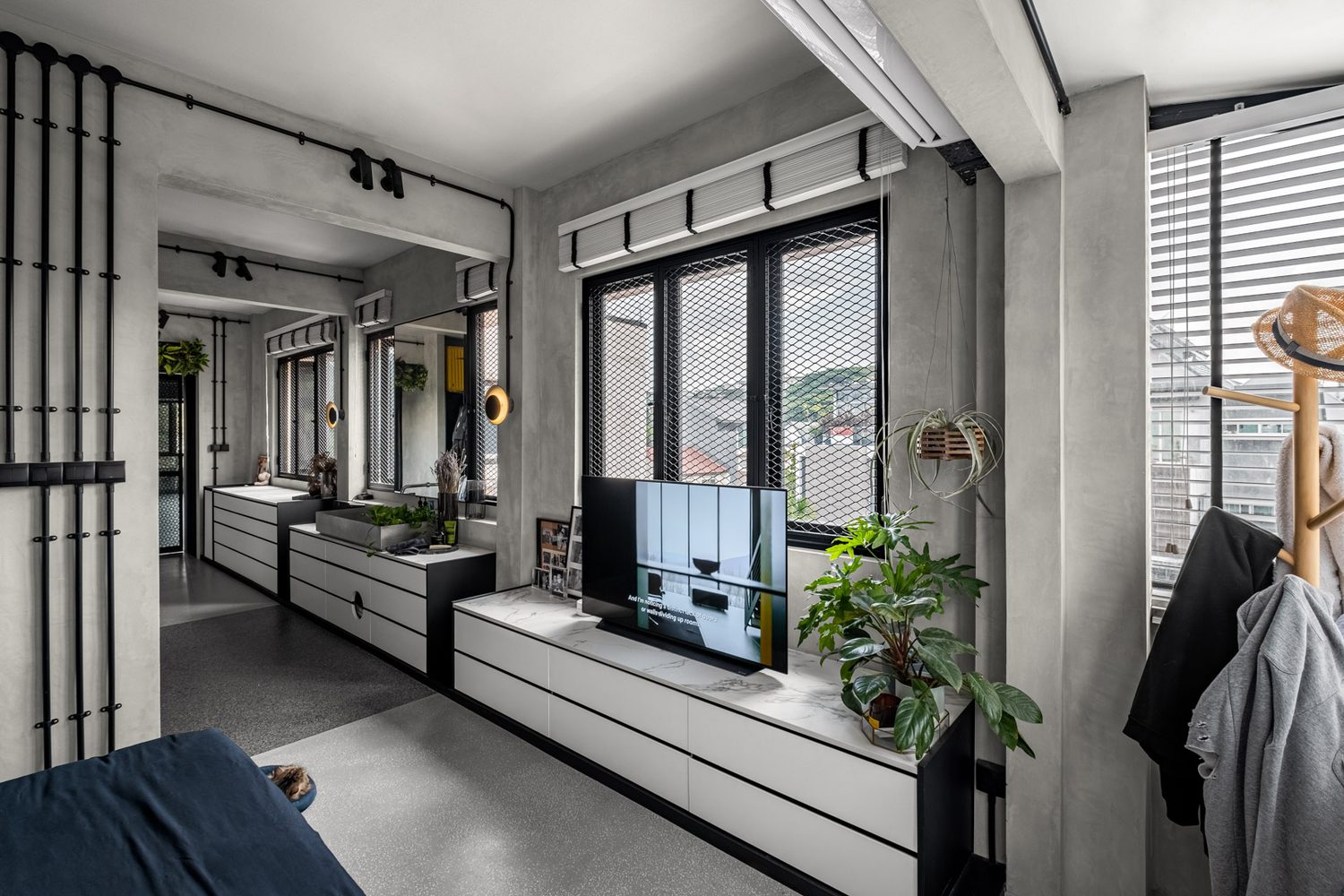
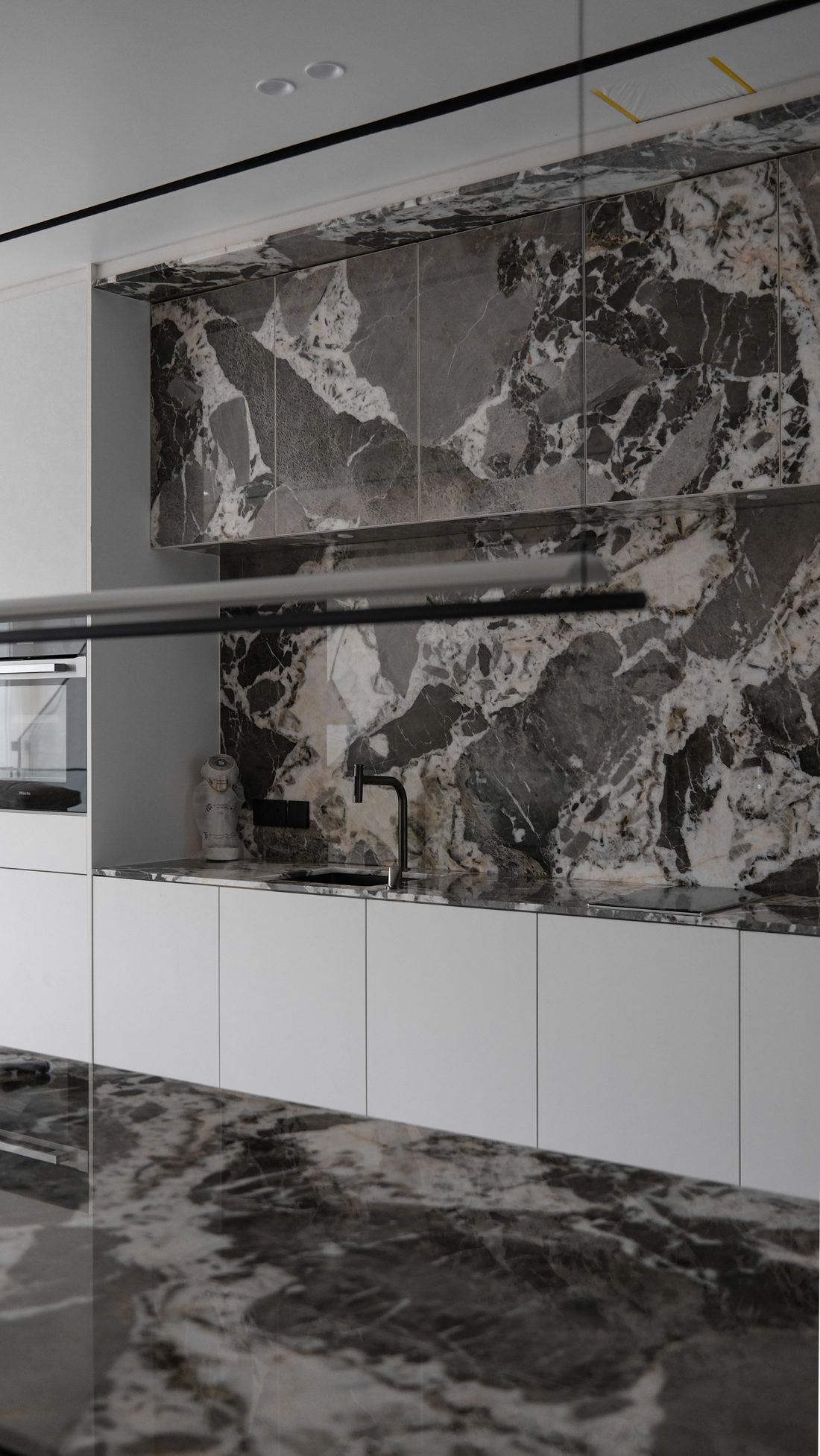
UNO is run by assholes.

Ask the clients we've turned down — the ones whose timelines we wouldn't pretend were realistic, or whose taste in finishes we wouldn't pretend we shared. Ask the contractors who've had to redo work we wouldn't sign off on. Ask the team, who get pulled back when they're trying to over-polish something already good. We've earned the reputation.

Most renovation firms in Singapore try very hard not to be like this. We've gone the other way on purpose.

Write to us at get@madewith.uno — one of us writes back.
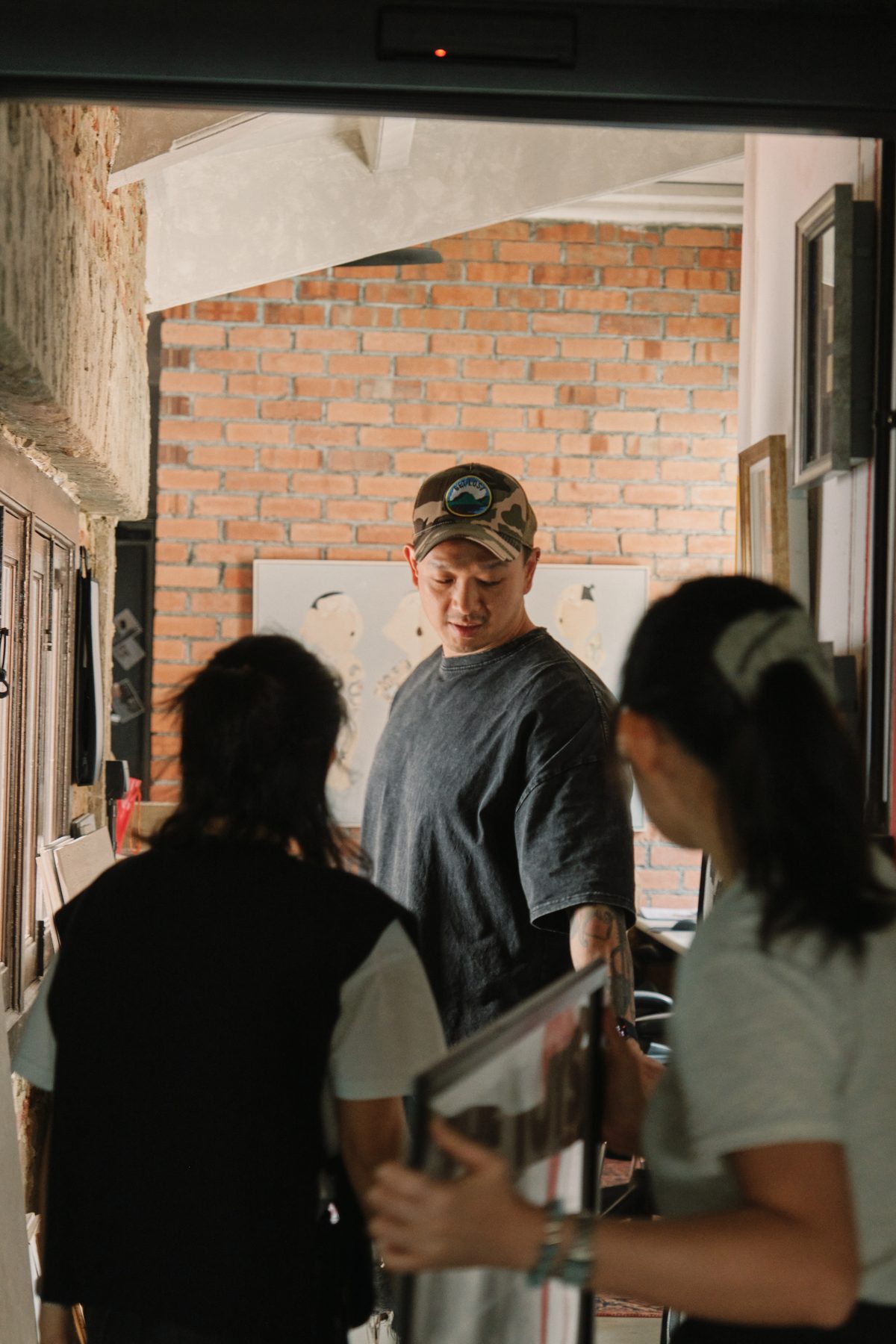
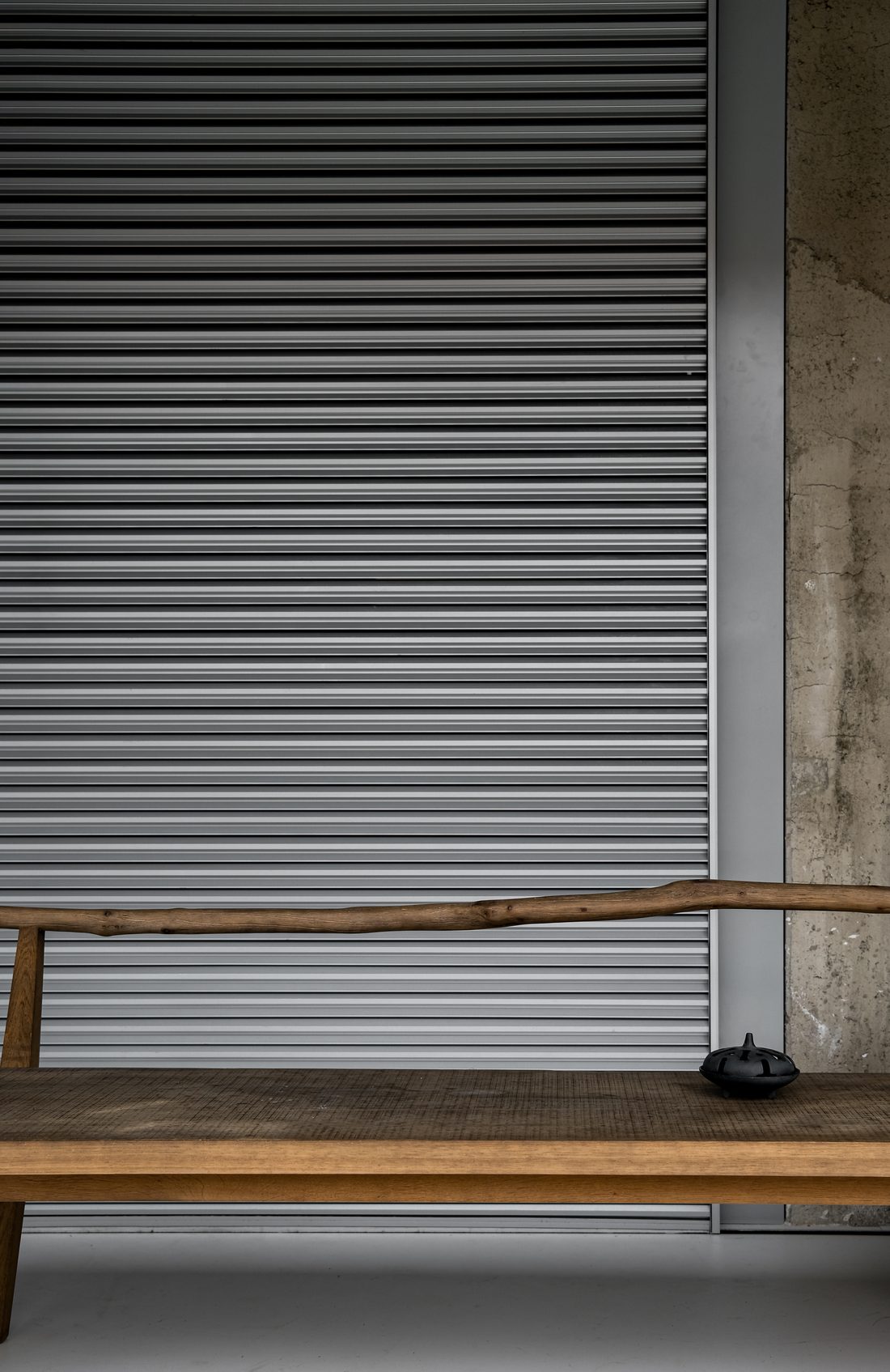
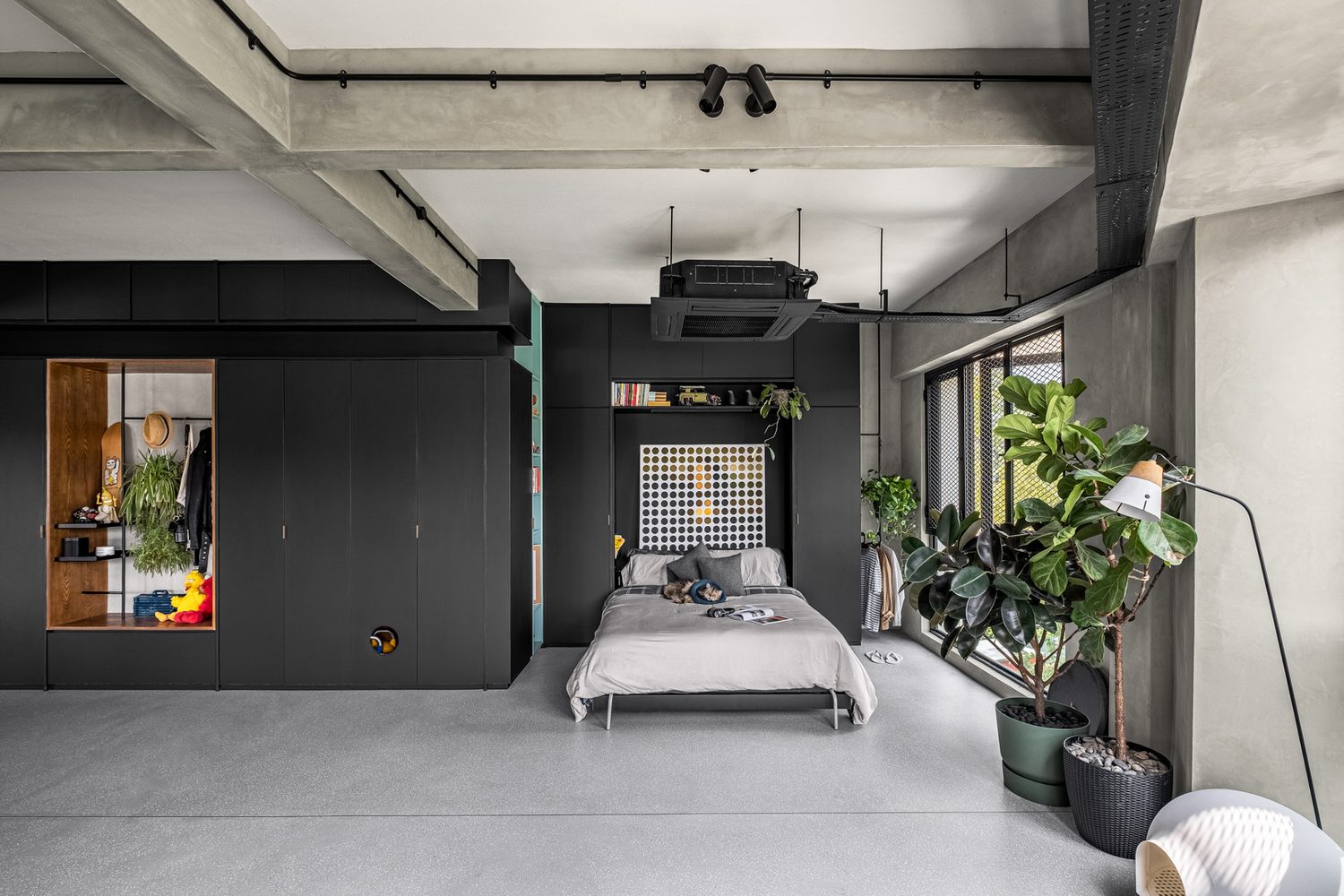
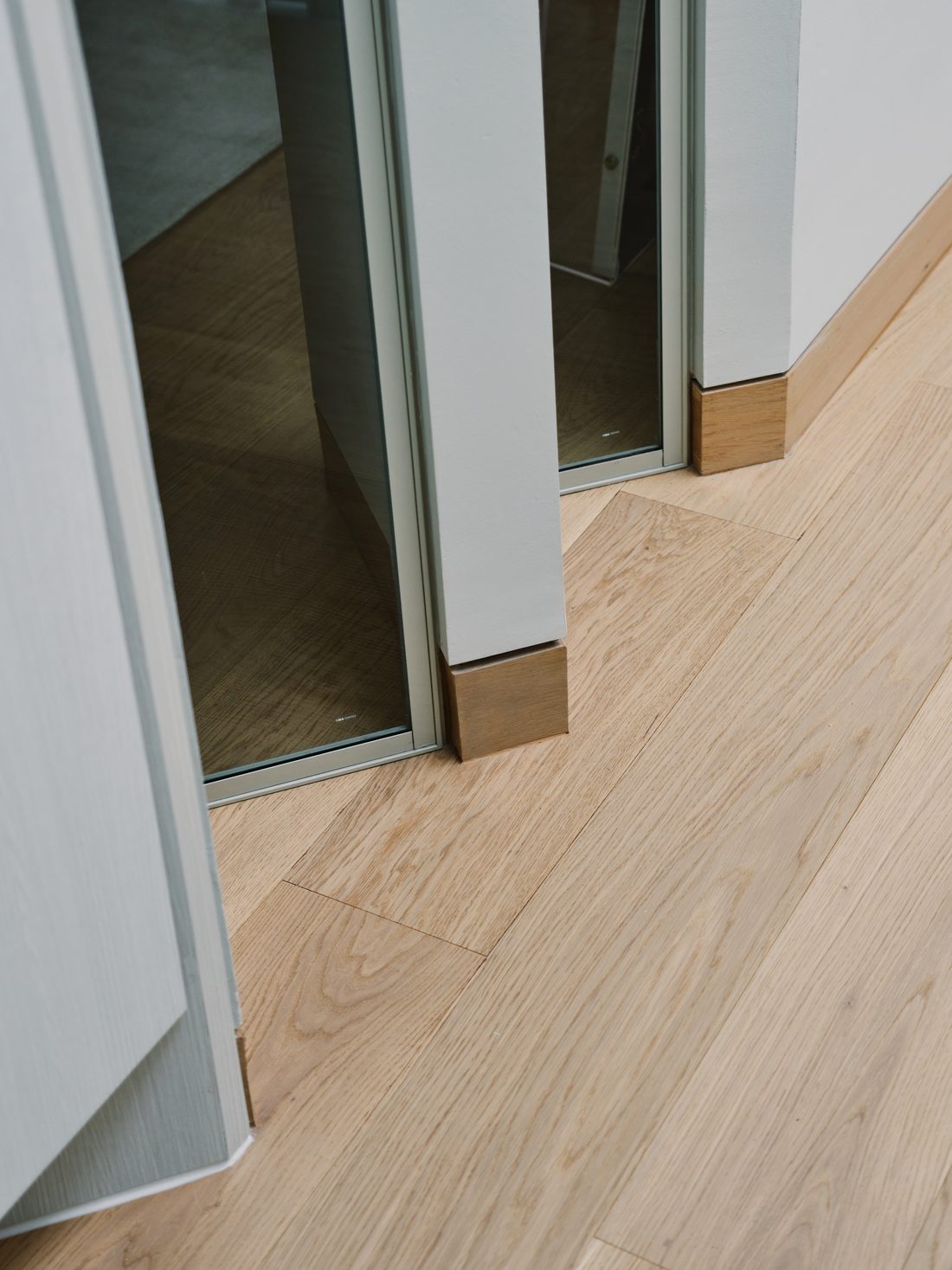
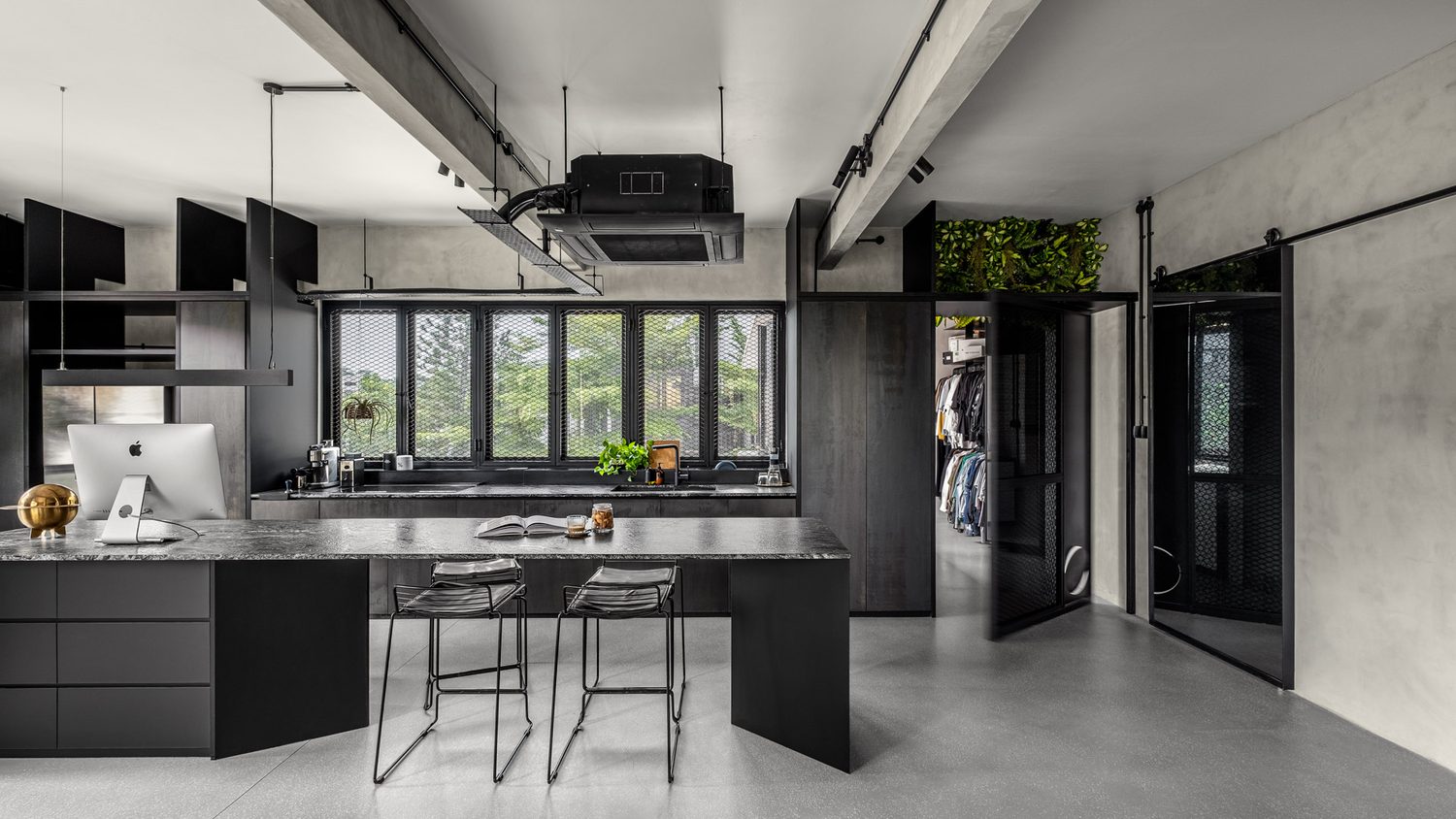
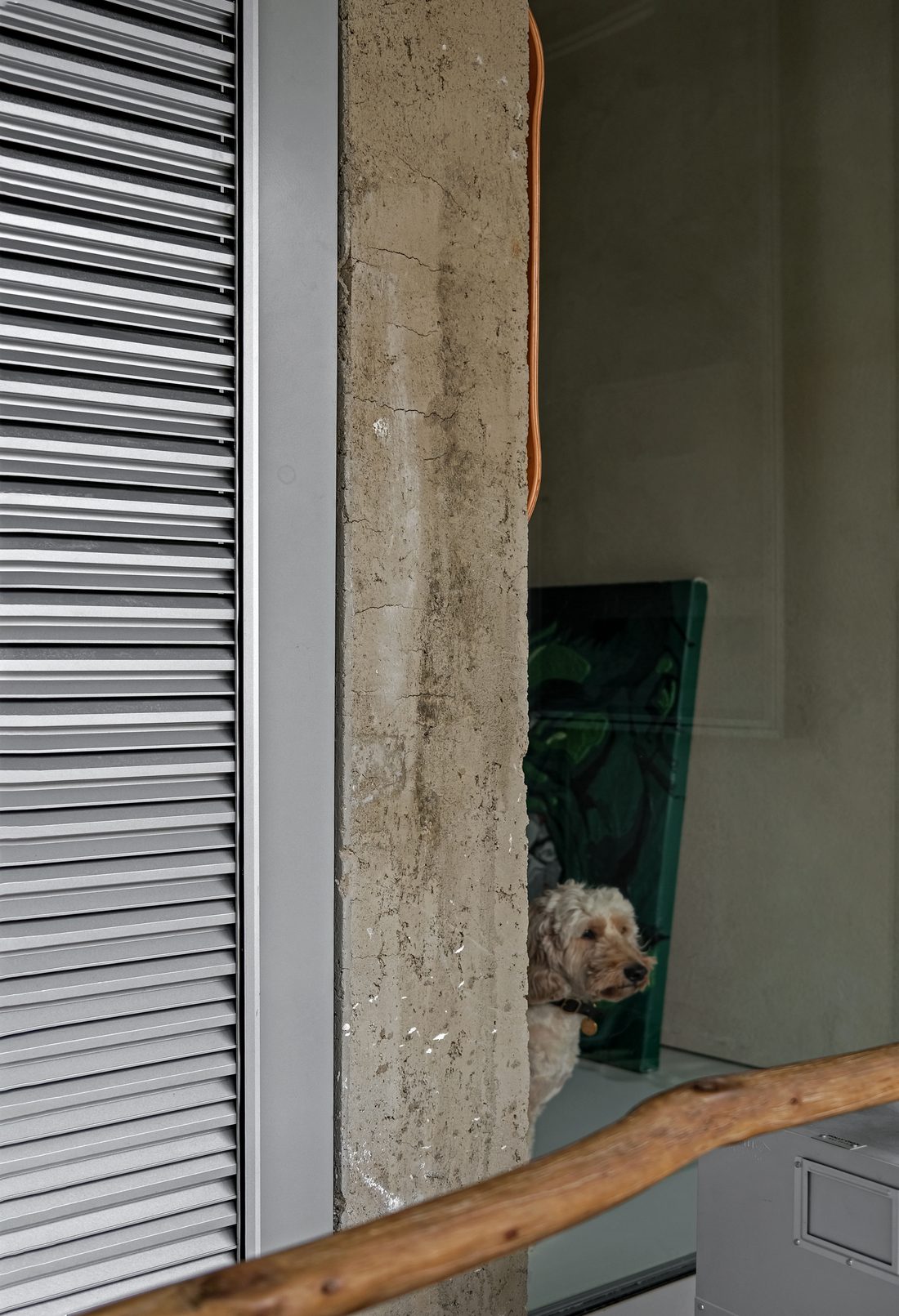
The studio at 2b Craig Road, seen through the crackle wire-glass
the firm

UNO designs and builds. We also run three specialist teams in-house: a drafting and rendering studio called Groundwerk, a finishes practice called unOrdinary, and a carpentry workshop called unOwned.

UNO means one. One voice — the client, the people who design, the people who build, moving in a single direction. Inside UNO there are no divisions of scope or role. When something is dropped, the nearest person picks it up — not because it's their job, but because the project is everyone's. We are only as strong as the person standing next to us.

We make sure that person is never standing alone.

Everything else about how the firm is built follows from that.

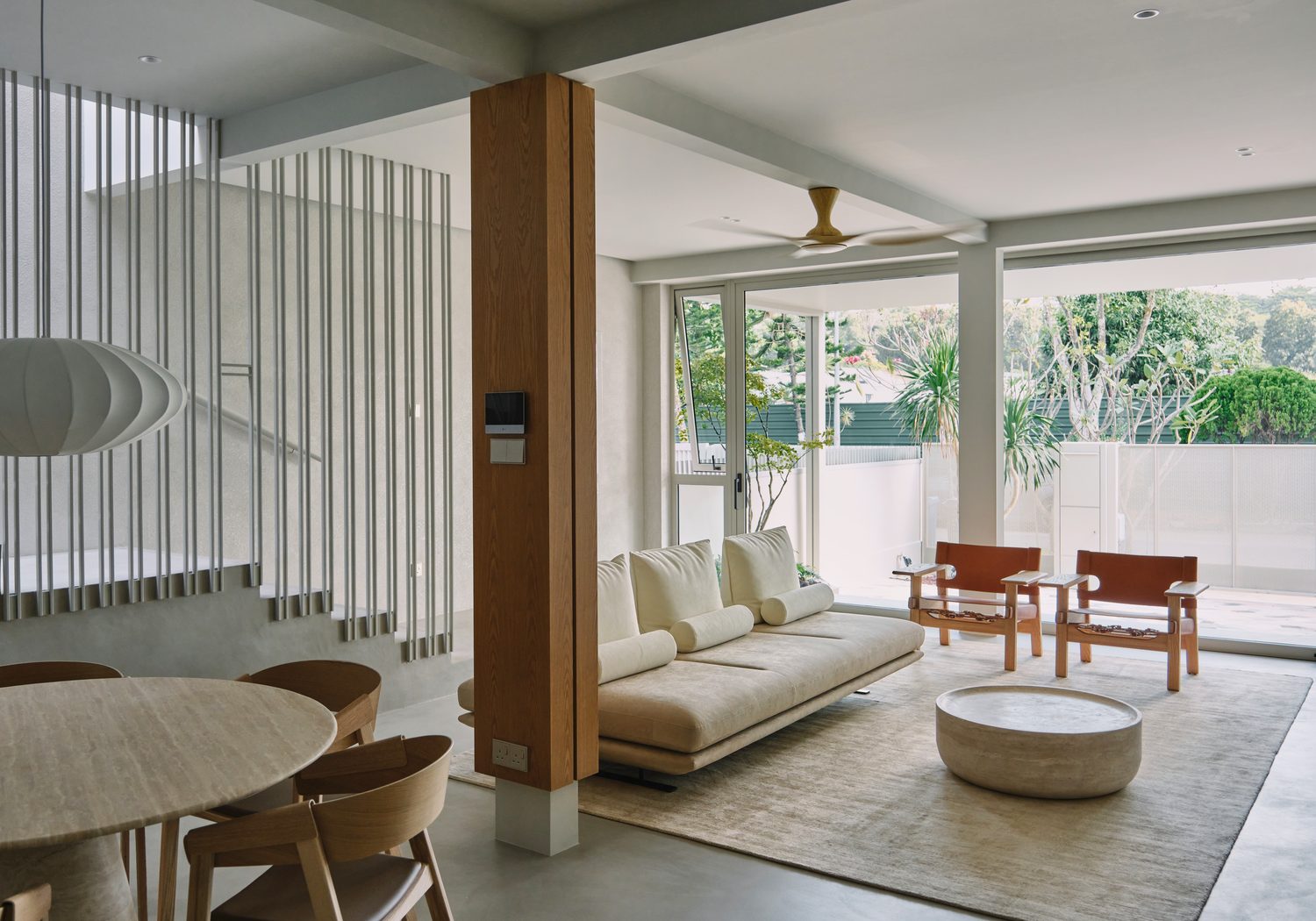
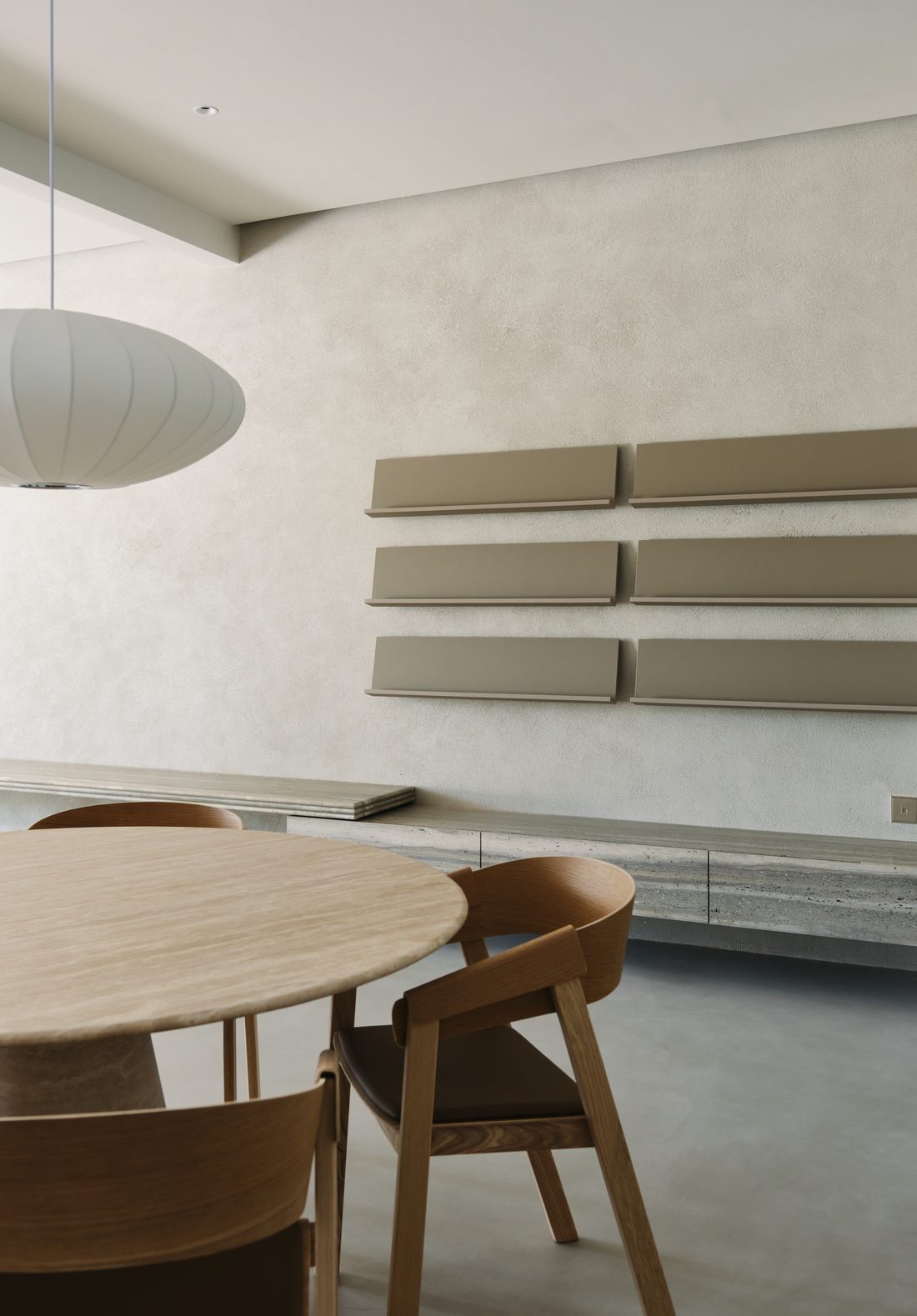
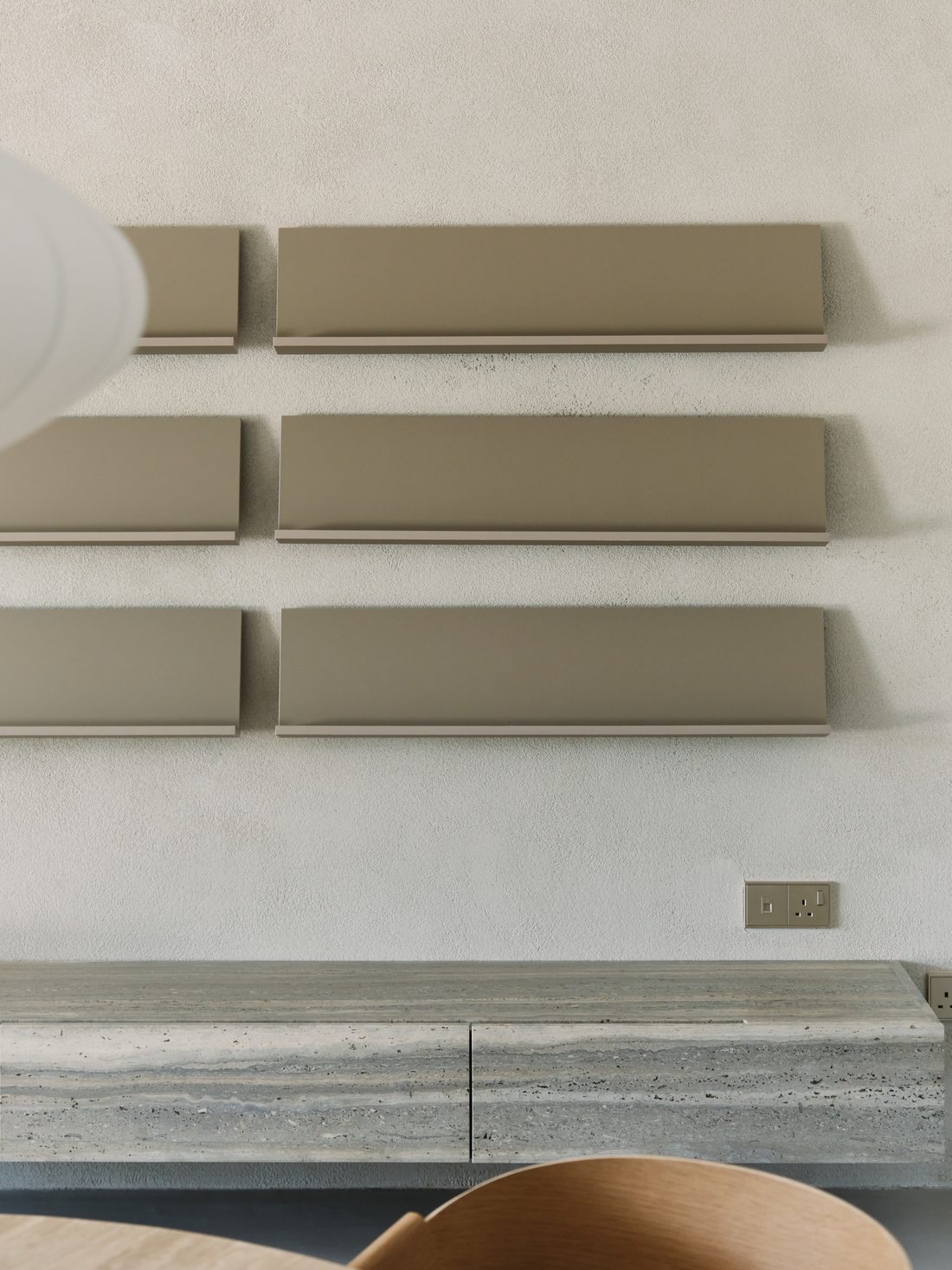
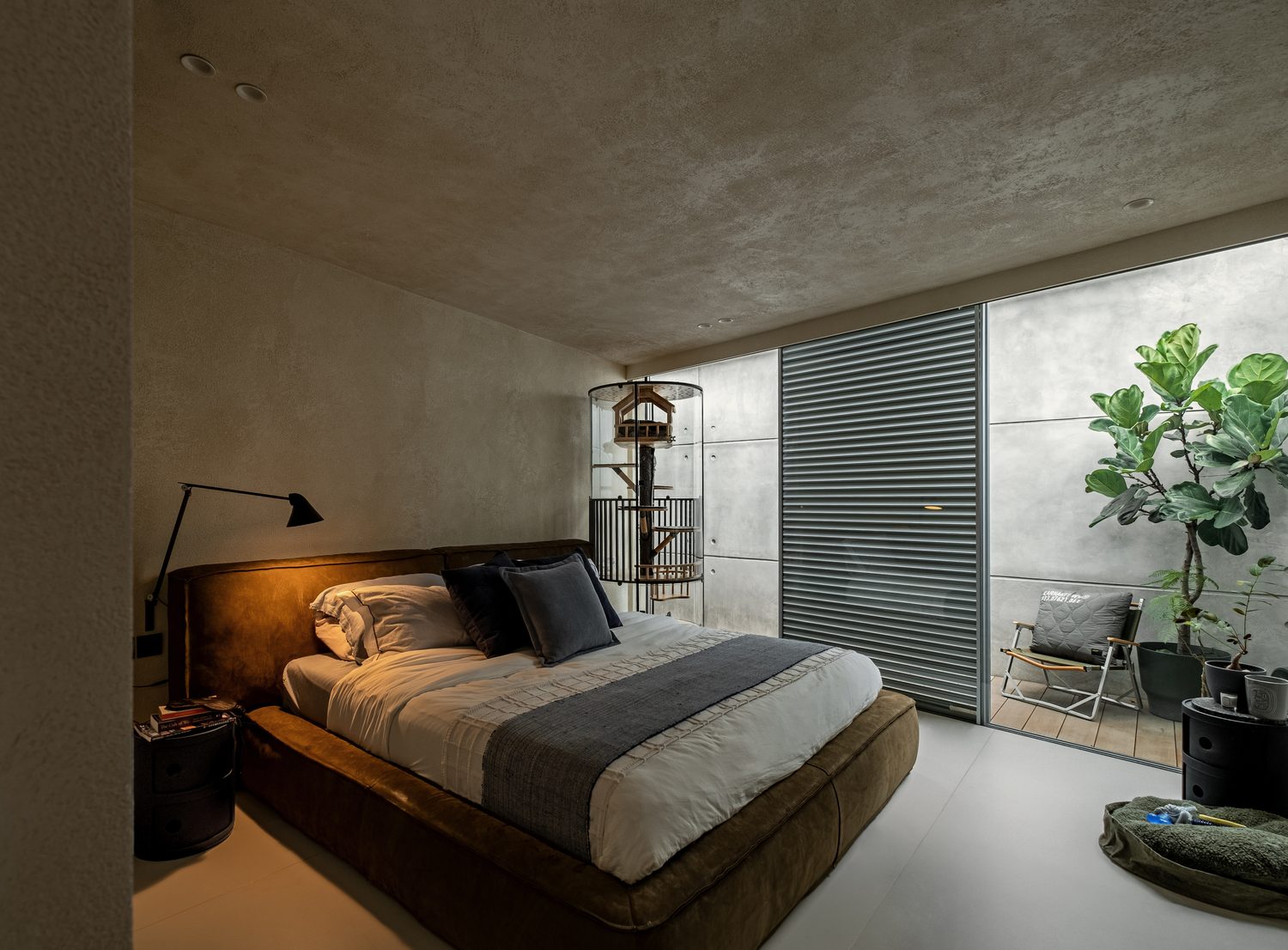
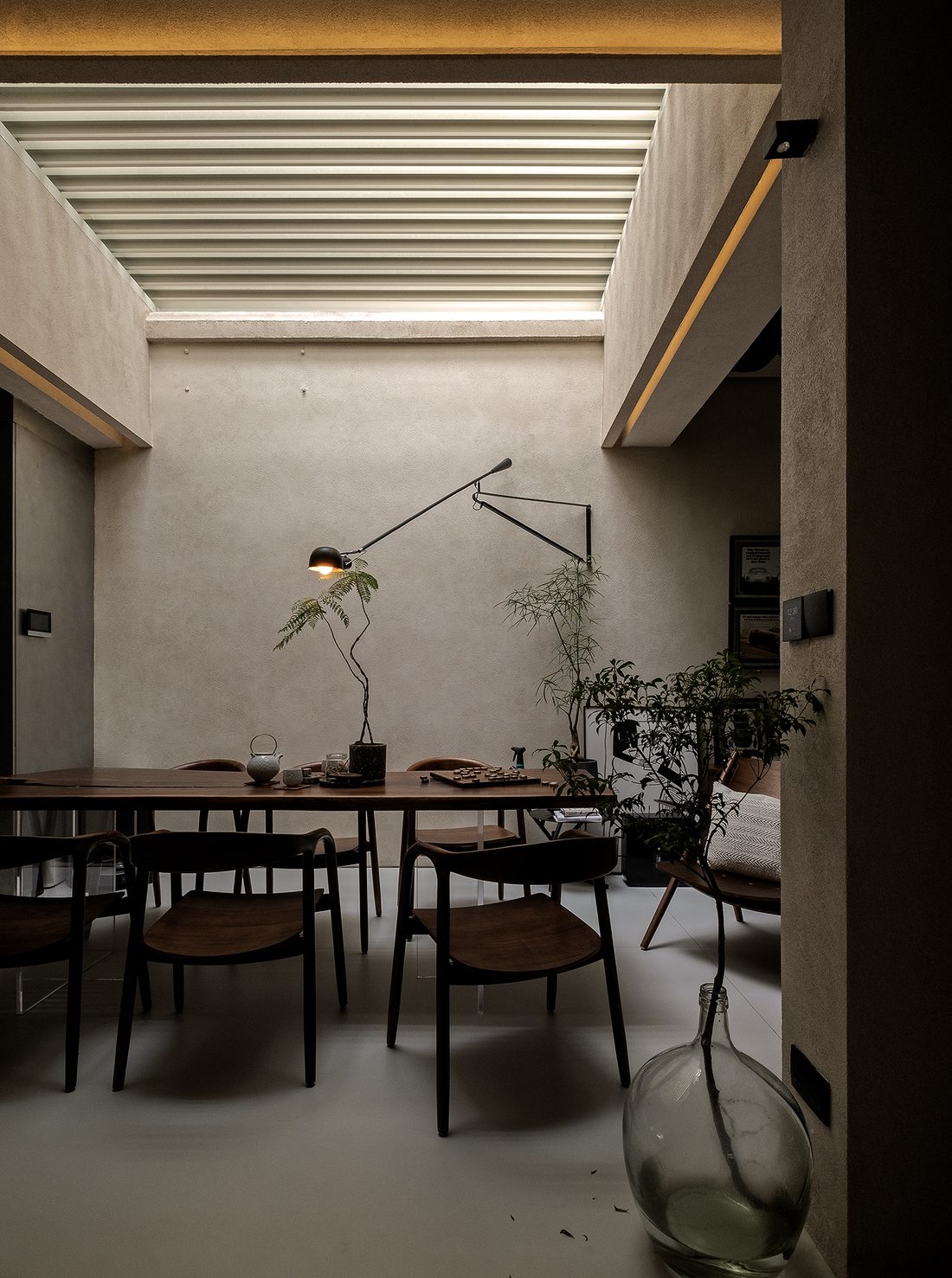
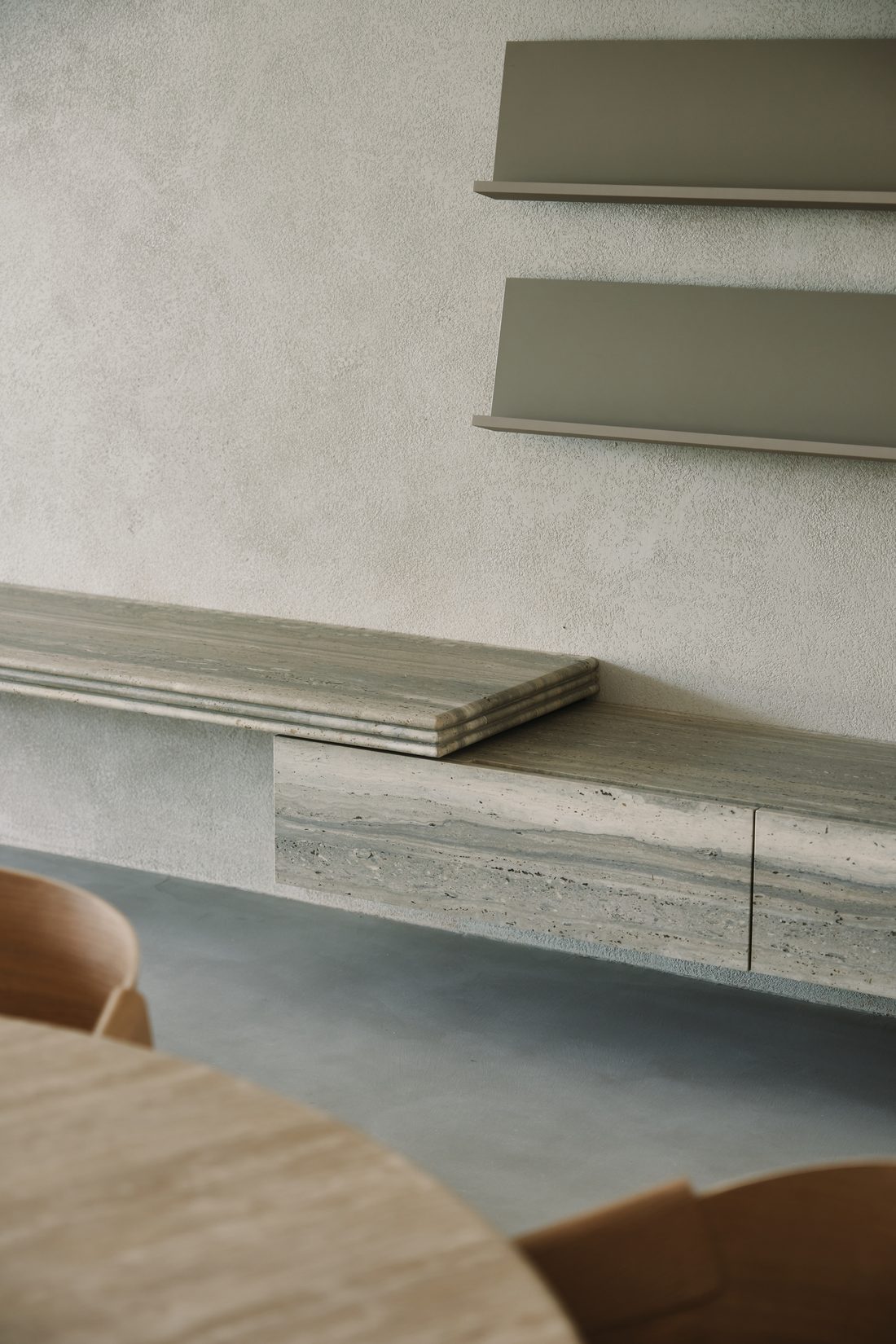
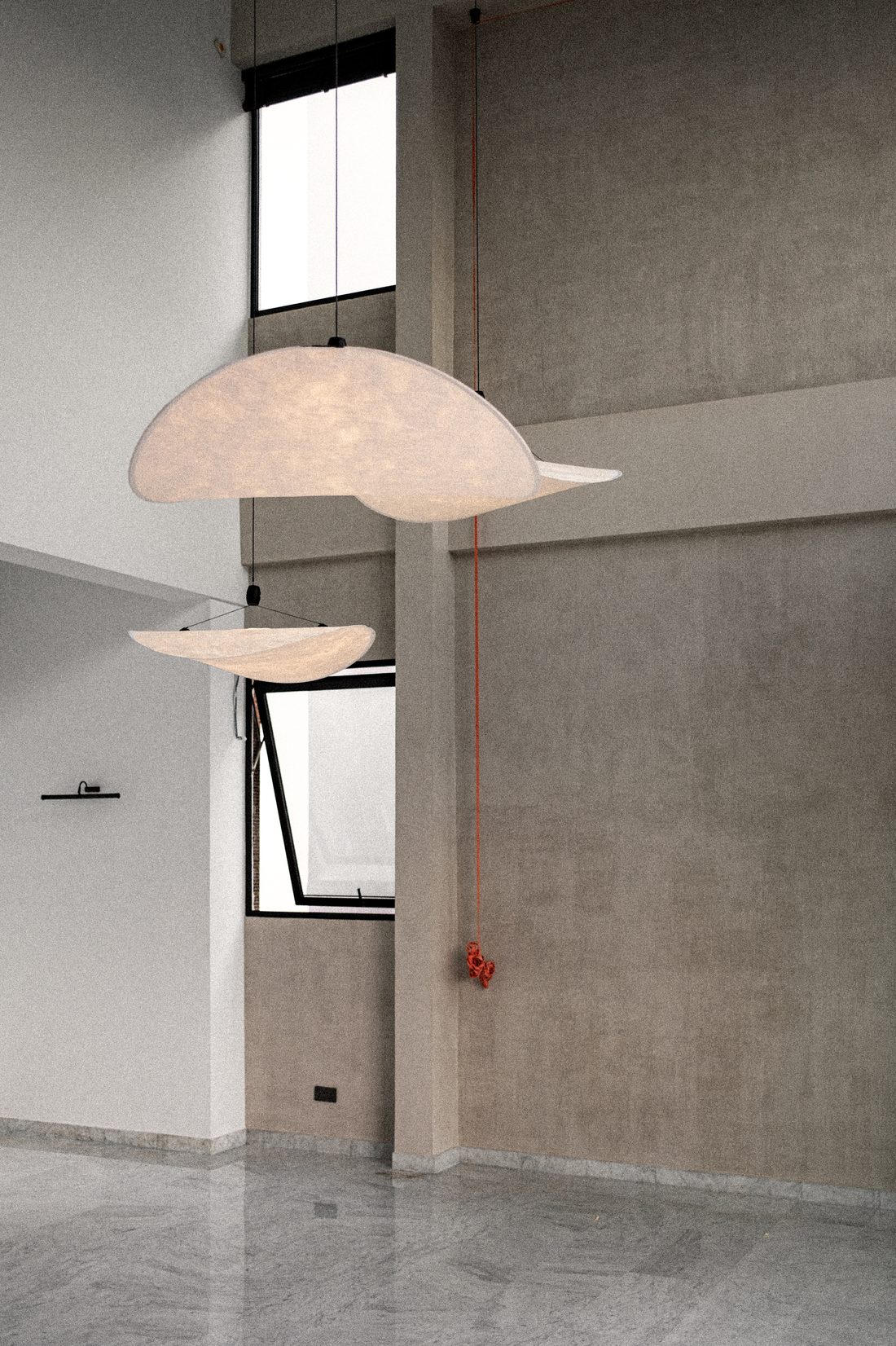
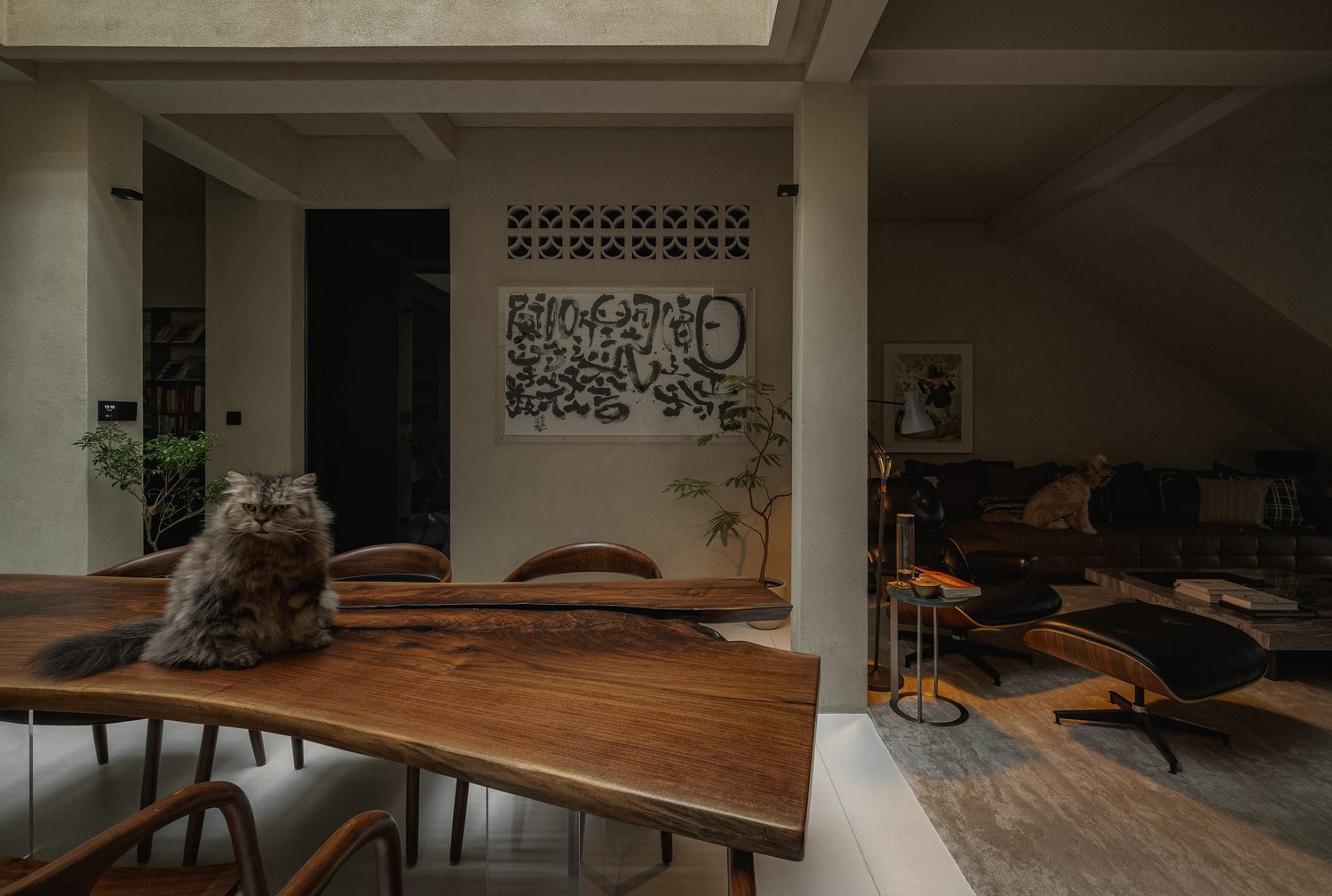
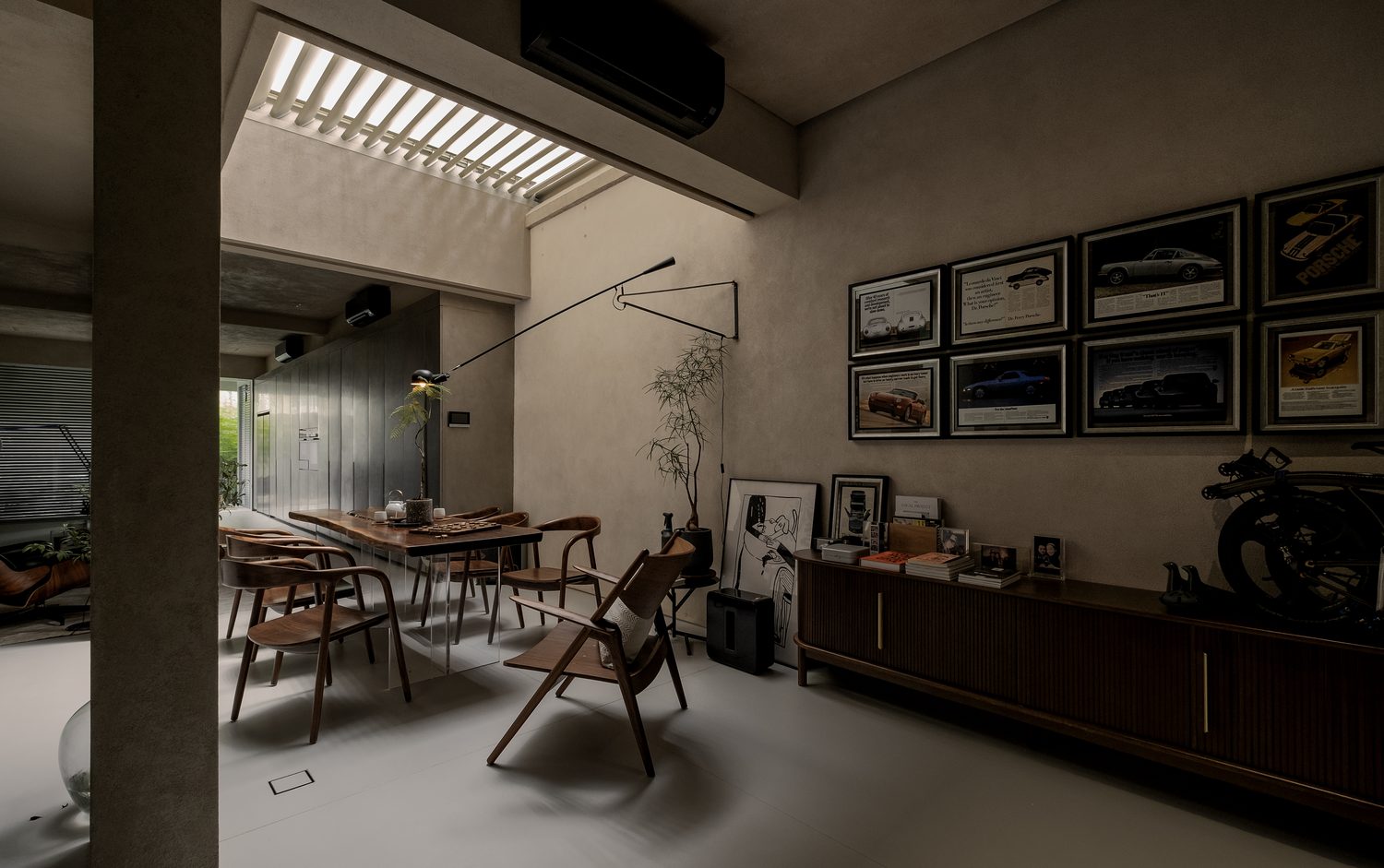
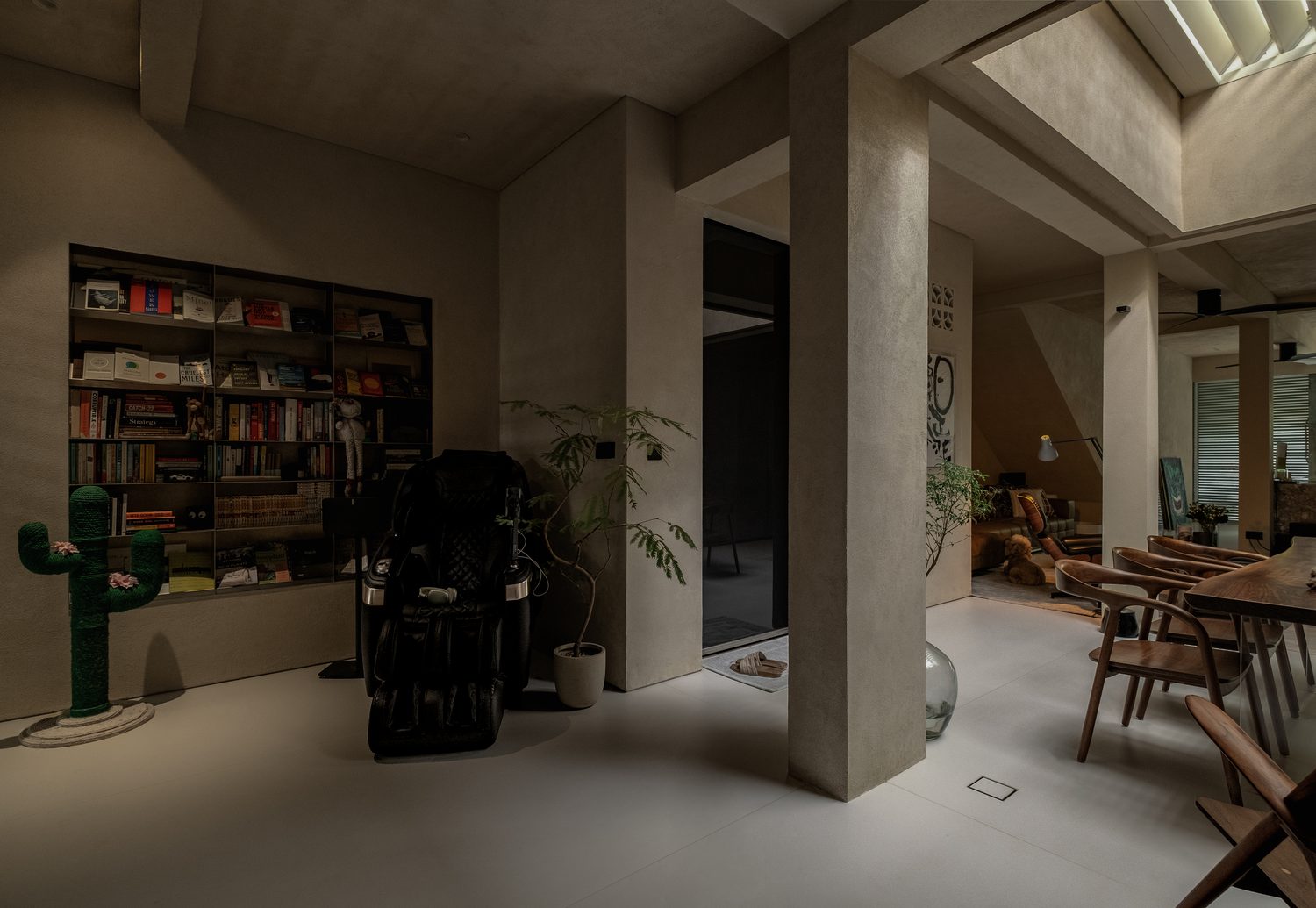
A finished UNO interior — a dining room in evening light

Each came in-house for the same reason: outsourcing it kept failing the client. Here they are, in the order we built them.

Groundwerk

Groundwerk came first. Before someone becomes a client, they're a buyer — and the property they're buying is usually the largest financial decision of their lives, made on the basis of a viewing, a floor plan, and an agent's pitch. Groundwerk is our drafting and rendering team. For UNO projects, it shapes what the client will eventually live in. For people who haven't bought yet, it drafts and renders the property they're considering, so they can see what they're actually looking at before they commit to a price.

Groundwerk at work — drafting space plans, at the studio Groundwerk, mid-line — the room drawn before it's built.

unOrdinary

unOrdinary came next. It's a specialist finishes practice — microcement, mineral plaster, limewash, Venetian plaster, steelwork. Specialist finishes get routinely specified by designers and architects and then handed to a builder to source someone to execute, and the execution is where the gap opens. unOrdinary closes that gap inside UNO. It also takes on external work for designer and architecture firms who spec these finishes into their builds. The craftsman behind it has previously executed the wall finishes for retail interiors at Aesop, Dior, and Fendi.

unOrdinary at work — the master craftsman with his team applying a specialist finish unOrdinary, mid-trowel — wet hand, wet wall, the surface becoming.

unOwned

unOwned is our carpentry workshop. Carpentry is the most pervasive trade in a renovation and the most common place where outsourcing hurts the client — warped panels, missed tolerances, late deliveries, work redone twice. It came in last because it was the largest commitment, and because finding carpenters whose standards we trusted took time. The name carries the principle: the workshop belongs to UNO operationally, but it exists to serve the client first.

unOwned at work — hands routing a piece of joinery, the tool marked UNO unOwned, mid-cut — one hand, one tool, the edge made.

The trades we don't house ourselves — tiling, ceiling, electrical, metalwork — are handled by specialist contractors we've worked with for more than seven years each. They're the only contractors we use in their respective trades.

We don't put work out to tender.

The relationships are old enough that accountability is part of how they work, not something we have to enforce.

The reason all of this exists is the same in every direction: the conventional way this industry handles the work has too many places where the client's interests can quietly fall through, and once they fall through, the client is the one left holding the cost.

We've spent eleven years closing those gaps, one at a time. That's the firm.
the team

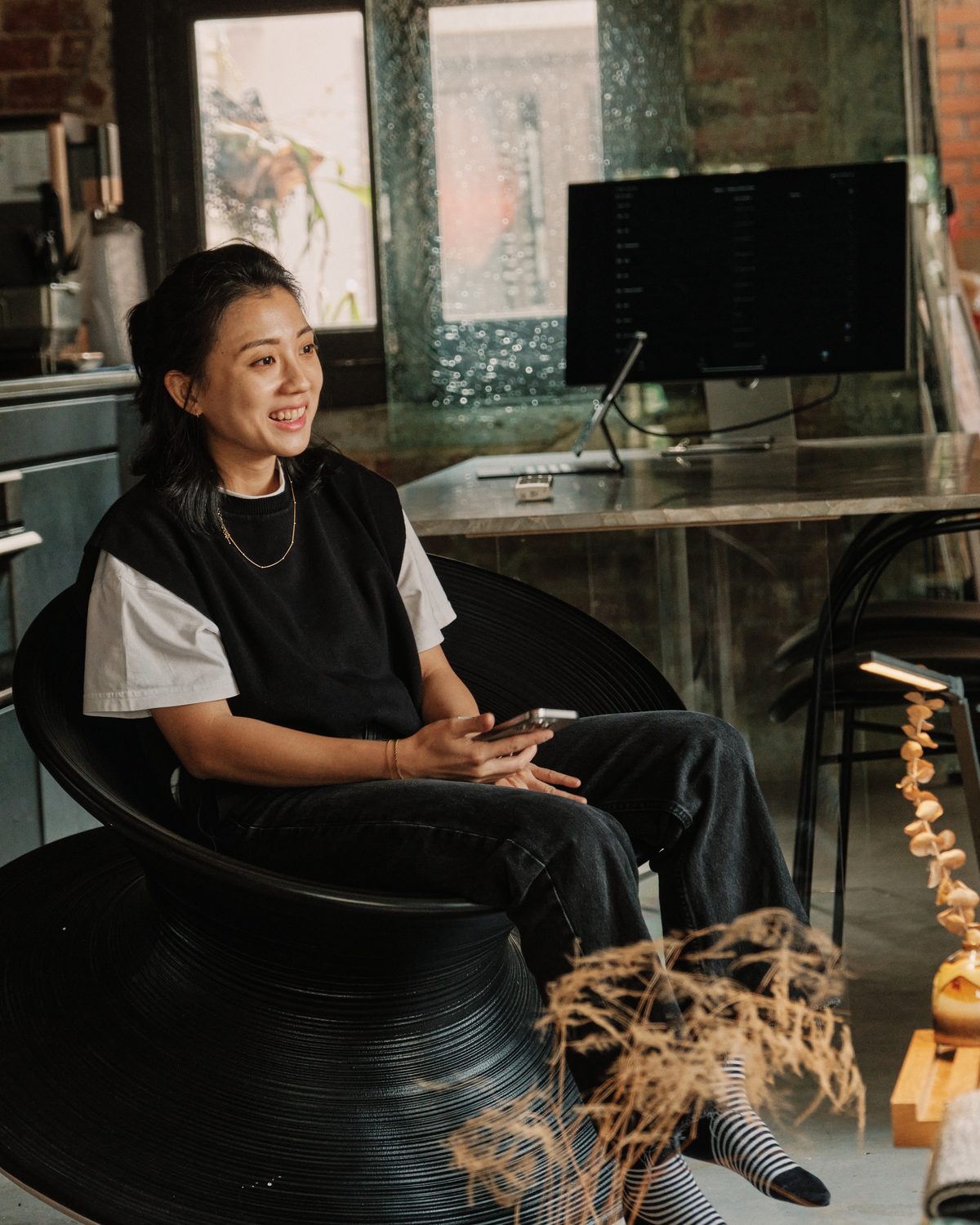
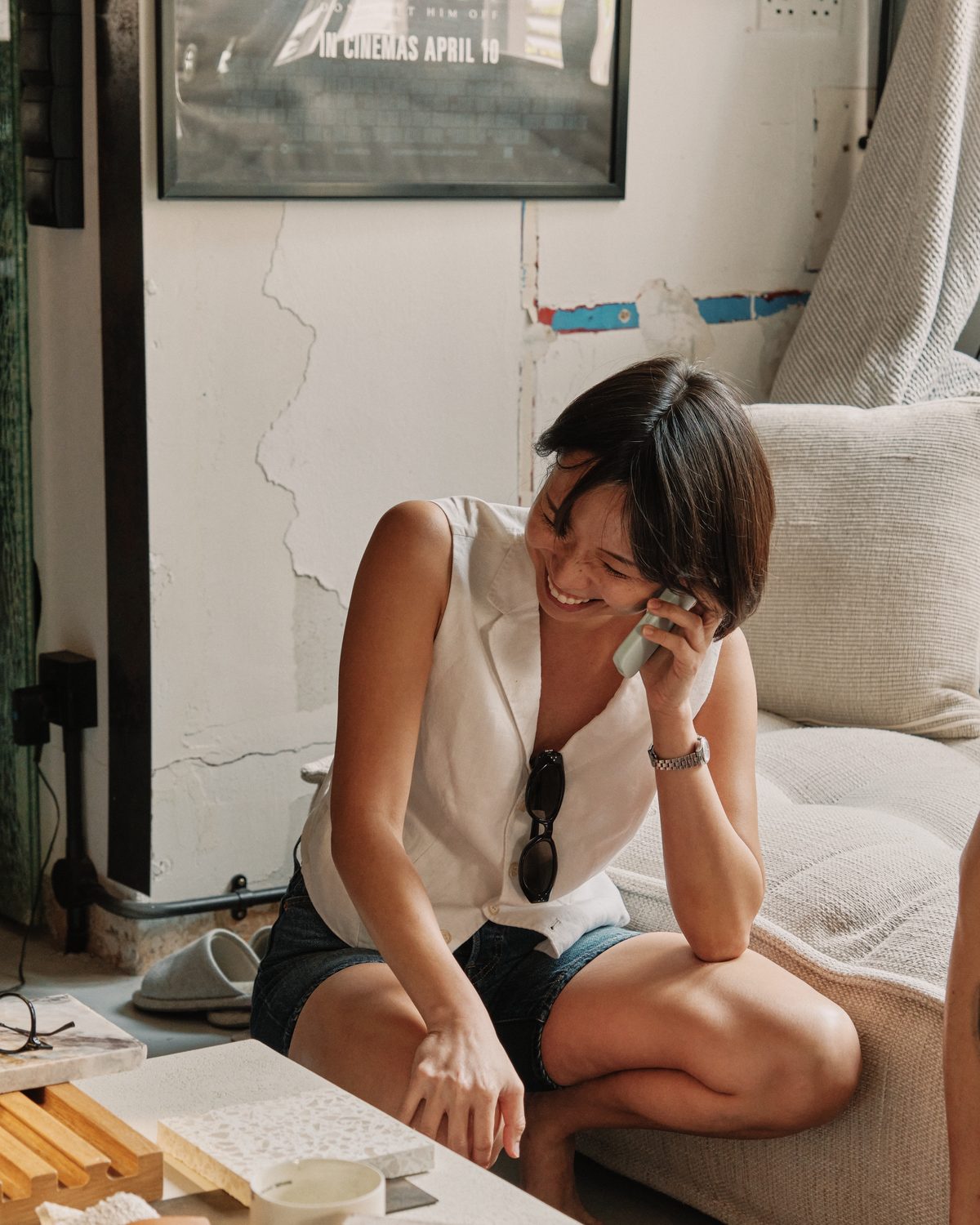
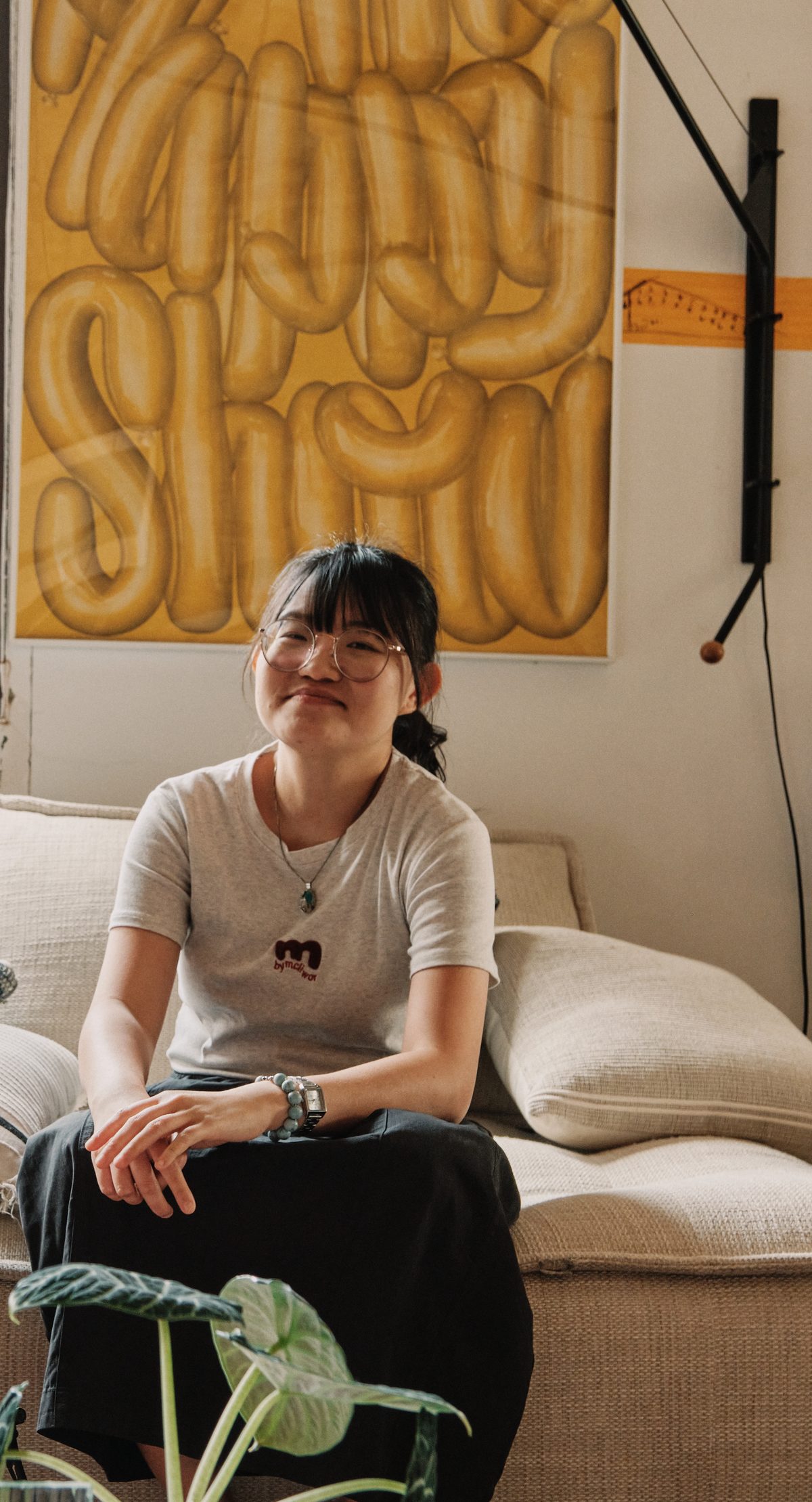
When you hire UNO, you hire the four of us. We're all on every project, from the first call to handover. That's not a marketing line — it's the practical reason we don't take on more work than we can carry. We've kept the team small because being on every project is the part of the work we actually like.

Each of us, in our own words —

Bios written together with the people they describe.

how a project moves
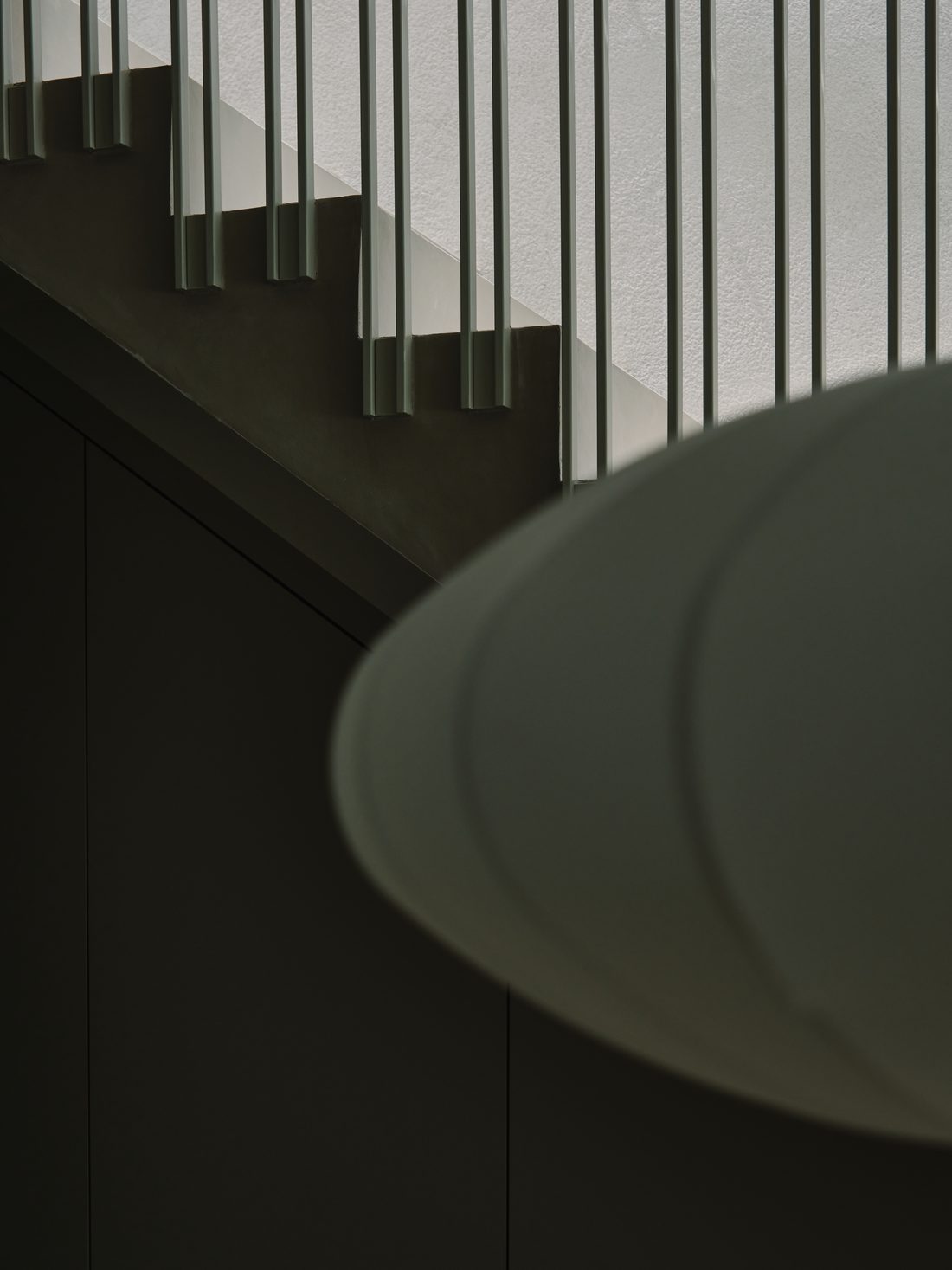
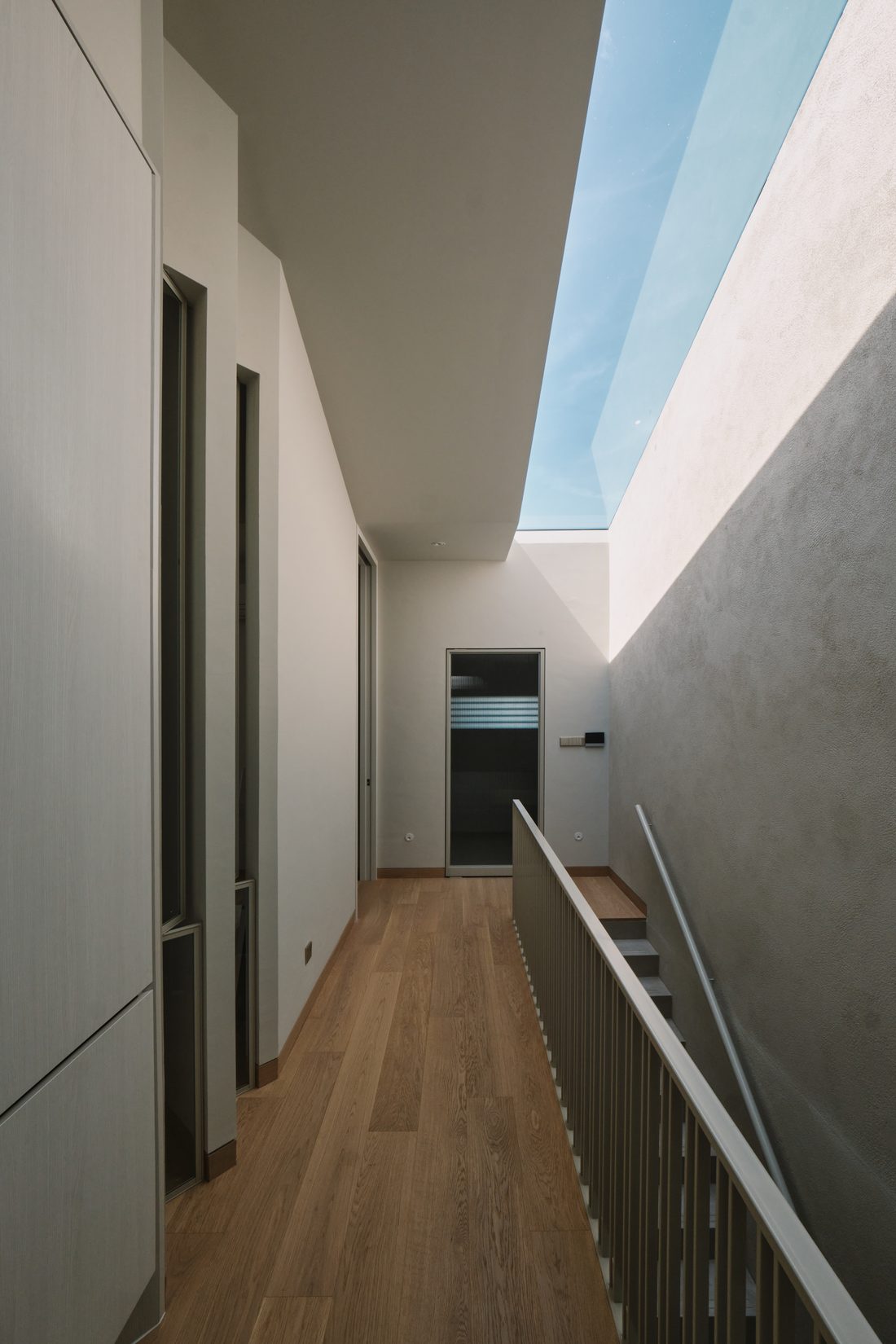
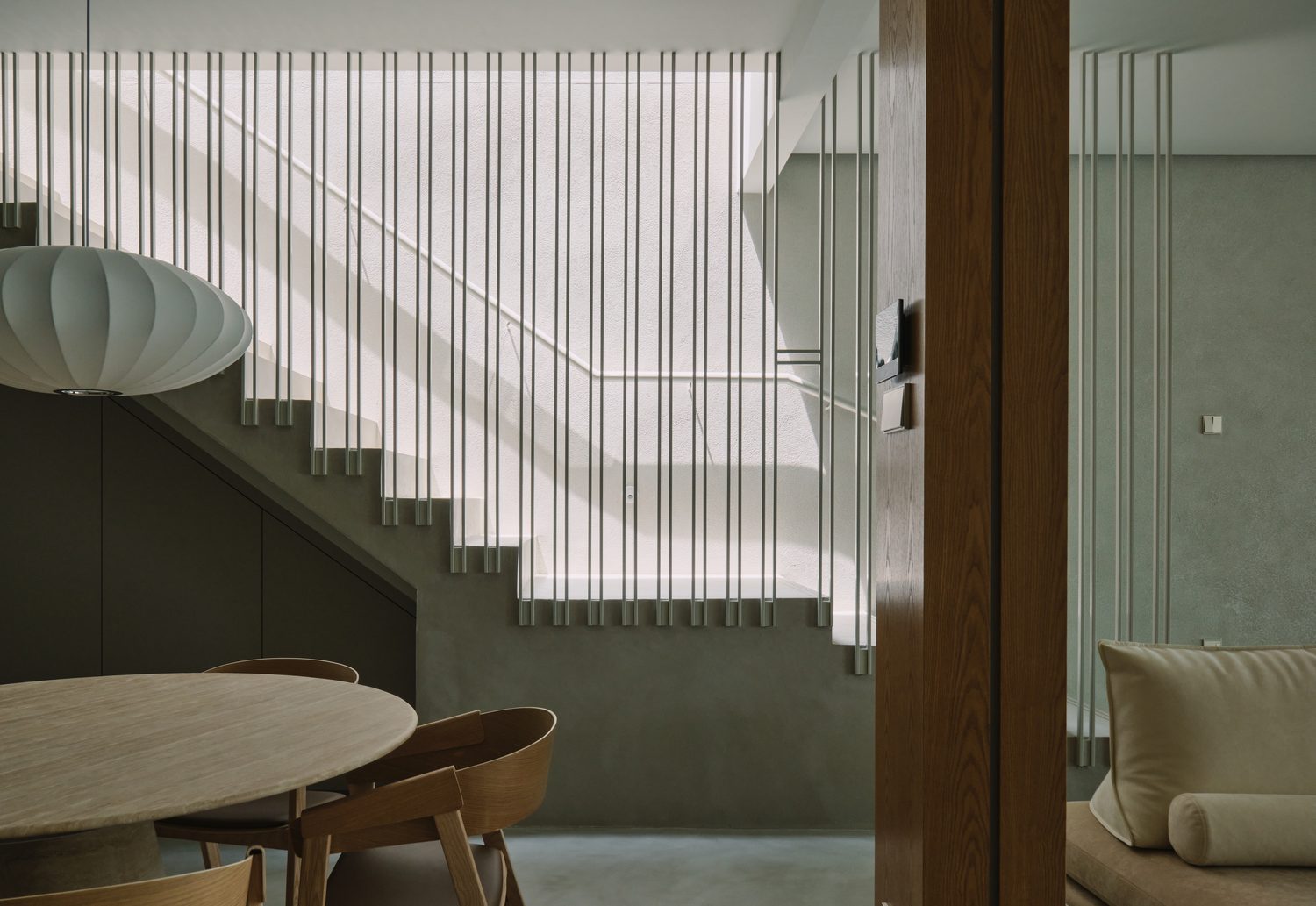
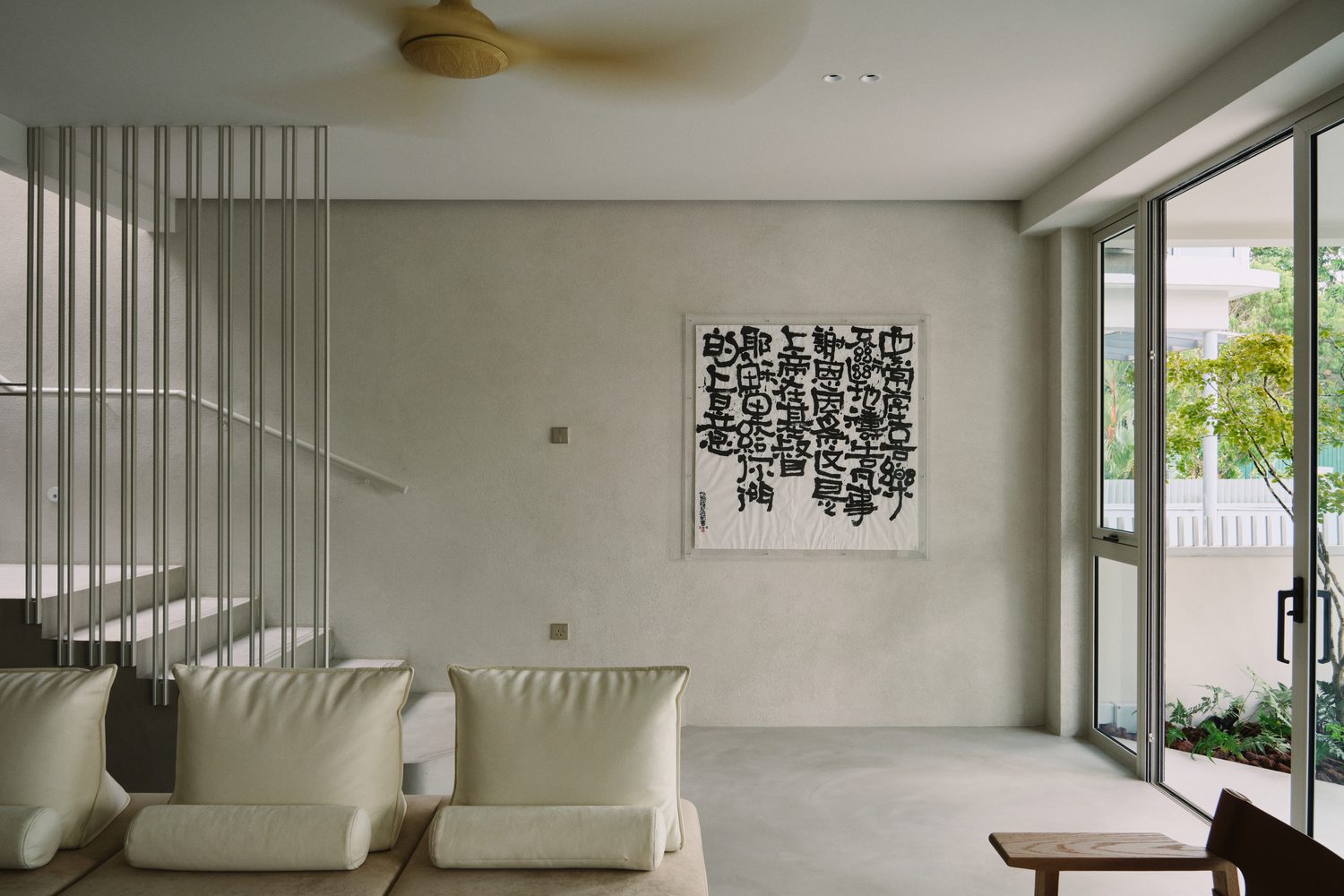
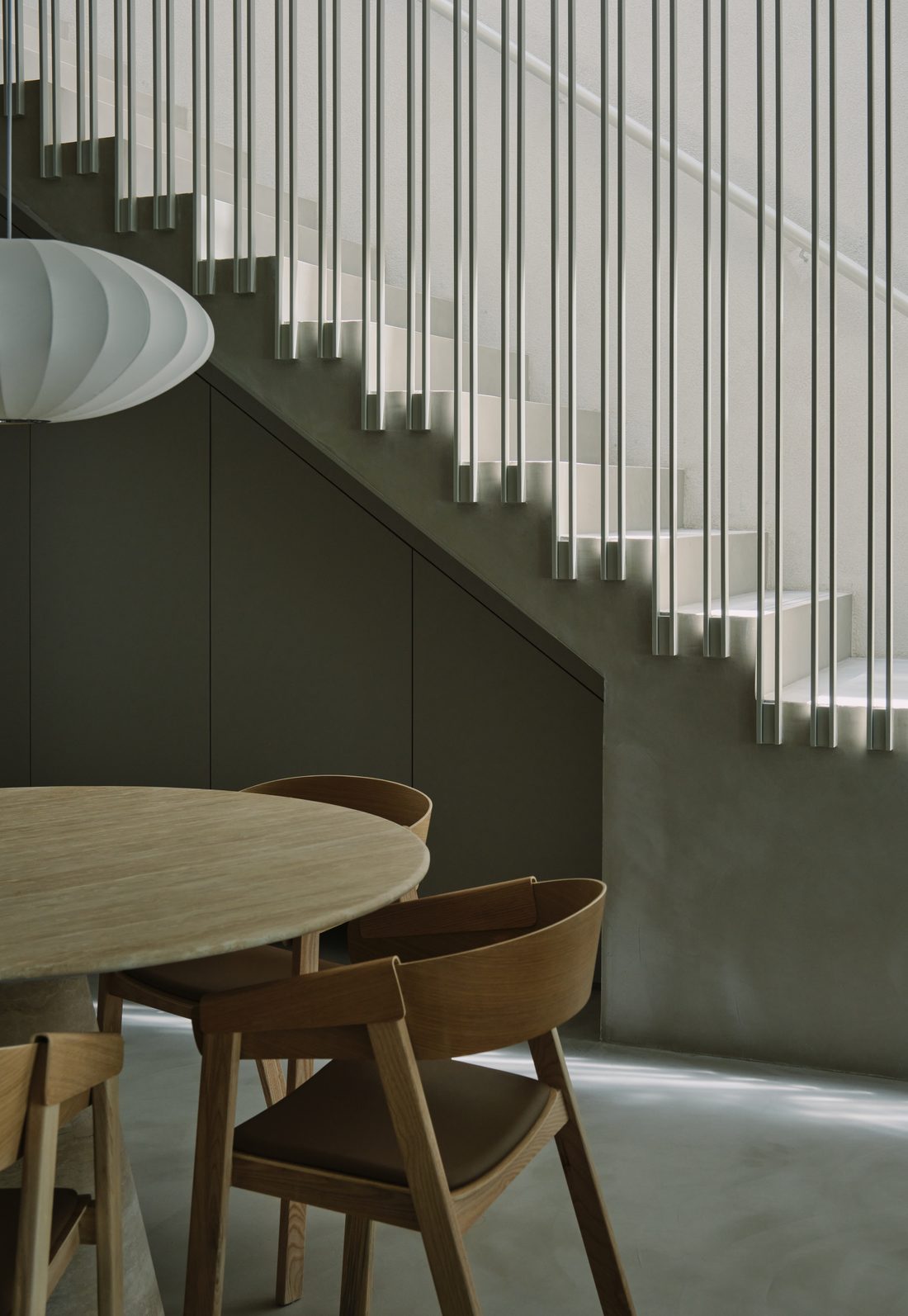
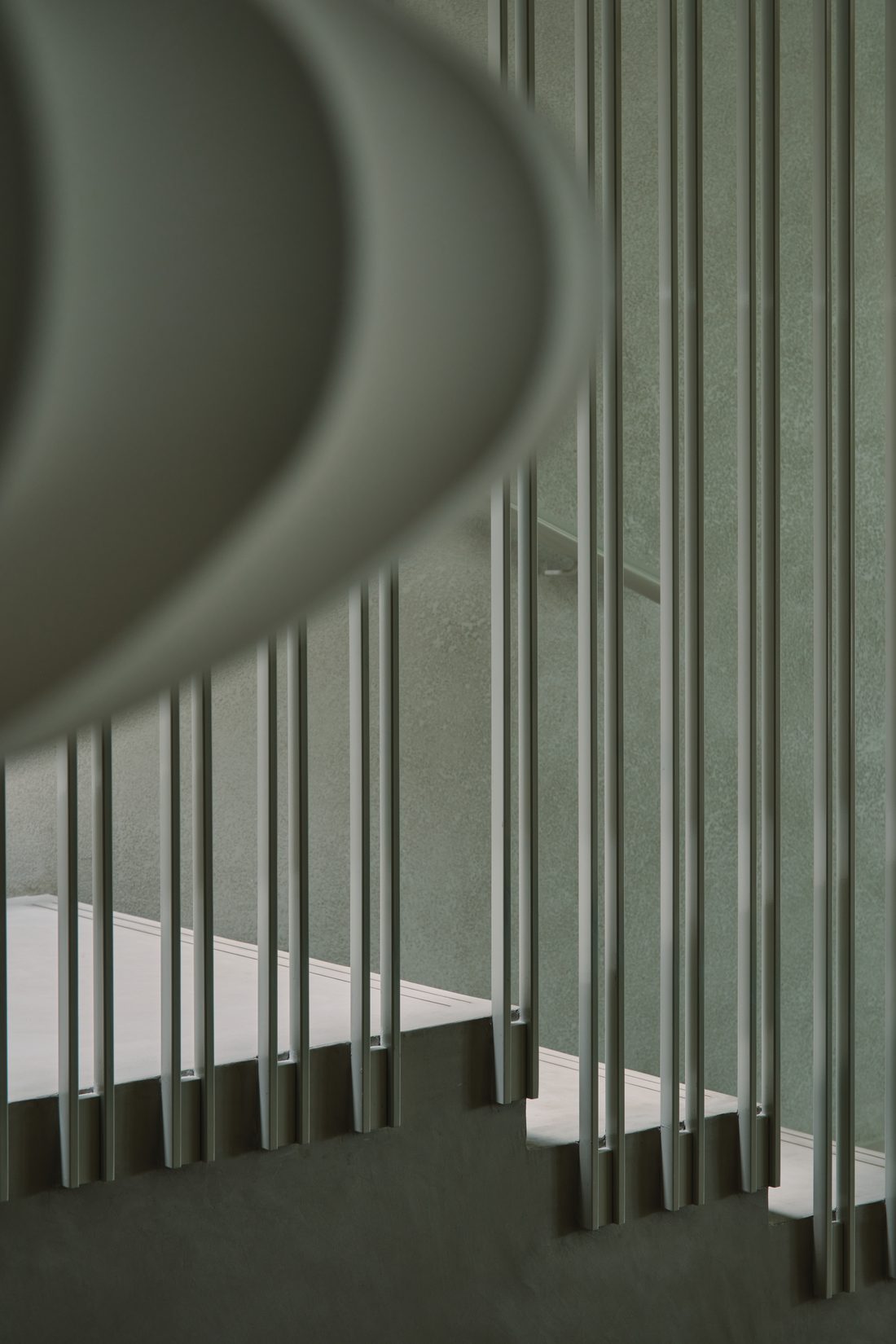
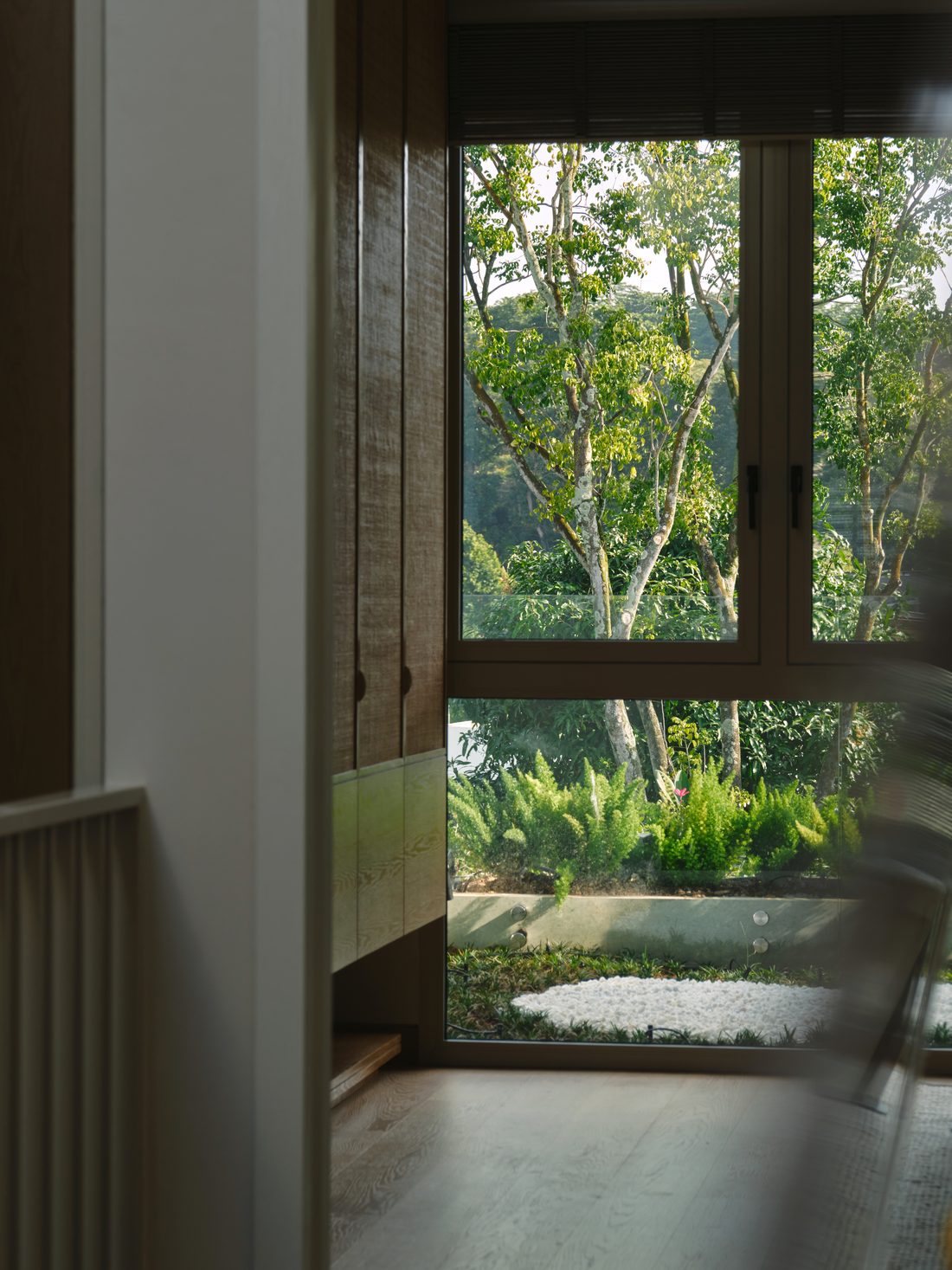
A finished UNO interior at rest — late light across a plaster wall, balustrade rods catching the day
getting acquainted
01

Reaching out

When someone writes to UNO, the first thing that happens isn't an email back. SianYing calls.

The call is short. She wants to understand what the caller is hoping to do — the space, the rough scope, the timeline — and to explain how we work, including the retainer, so the shape of the commitment is clear from the start.

Occasionally the call ends there. If the timeline is one we genuinely can't do well, SY will say so on the phone, rather than let the caller prepare for a meeting about a project that was never going to work.

For everything else, we arrange to meet. Even when a project might not turn out to be the right fit — that's not a decision we'll make from a phone call. We owe the client a proper conversation first.

02

The first meeting

The first meeting is at the studio. The purpose isn't to present UNO. It's to understand the people sitting across the table.

Every client lives differently. The meeting digs into that: not the renovation a client imagines in the abstract, but the way they actually live. How the kitchen gets used. Who takes an afternoon nap, and where. How often family visits, and for how long. Which room the household actually spends its evenings in, and why.

The questions keep going until what the client needs and what the client pictures have been told apart.
the concept
03

The retainer, and the concept

If the client wants to continue, they retain UNO.

The retainer is the first commitment. It's calculated, not quoted — based on the floor area we'll prepare the concept for — so the client can see exactly how the figure is reached. It's non-refundable: over the fourteen working days that follow, we do the work it covers.

That work is the concept. Space planning built from everything the meeting surfaced, drawn against the floor plan, and alongside it the SketchUp visuals — so the client sees the proposal as a space they could walk through, not a 2D drawing they have to decode.

04

The concept presentation

When the concept is ready, the client comes back to the studio. Sam, SianYing, and Jeselyn present it together.

We don't show the concept all at once. It's layered. First the 2D plan: the flow of the space, and how the client's own habits have been worked into the planning. Once that's understood, the SketchUp walk-through goes on top. Now the client isn't reading a drawing; they're moving through the space.

The layering is deliberate. Each thing rests on what the client has already taken in, so they always have a reference point.

The concept is something the client is brought through, not presented at.
05

Digesting the concept

After the presentation, the client takes the concept home. Not for a decision on the spot — for a week or so to live with it. Things surface once they can picture the space: something to improve, something to add, something that looks different once it's no longer abstract.

They come back with those thoughts. We revise. Only once the layout is confirmed do we move on.

the quotation
06

The costing meeting

The quotation gets a meeting of its own.

It runs to tens of pages, and we account for as much as the planning stage allows. It isn't the final number — some costs can only be known after the 3D renderings, and we tell you so when we hand it over.

We walk you through it in person. Alongside the numbers, the actual material samples we've chosen with you through the concept. You hold each one as we go. If an area needs tightening, this is where it happens.

Materials in the hand — samples, hardware, finishes laid out artefact Materials, mid-decision — in the hand, in the light, in the room.
07

Appointing UNO

Signing off the quotation is the moment UNO is appointed as the design team. The deposit is collected here.

This is the real commitment.

We don't ask a client to commit blind.

By this point you've seen the concept, walked through the space, been talked through the costing, and held the materials. We don't do the work that follows on spec. Both sides have shown their good faith.

the build
08

Homework

What follows is the most intensive stretch of the project — four to six weeks of it. It begins with the client's homework.

There are things only the client can decide. We send them away to work through them properly, rather than settle them in a room under time pressure.

09

The 3D renderings

Then the 3D renderings. Where the SketchUp walk-through let the client feel the space, the renderings show its aesthetic skin — what the home will actually look and feel like, the surfaces and light and materials resolved into something close to real.

The client digests, comes back with thoughts, revisions are made, and the renderings are confirmed.

10

The detail drawings

Then the detail drawings — the functional truth of the project: how everything works, how it's used, the specifications behind every element.

We prepare this deck for two audiences at once: the client and the build team. One set of drawings, not a client version and a builder's version. The client approves it; the build team builds from it; both return to it if a question or misunderstanding ever surfaces. Design and build are held to the same document, because they're meant to be one voice.

The client digests, returns with thoughts, revisions are made, and the drawings are confirmed.

A detail drawing in mid-review artefact A detail drawing, mid-review — three of us, one pen, a mark.
11

On site

Only after all of this does site work begin.

By the time it does, the client knows what's coming. The build phase is short to describe here, on purpose — most of what makes a build run quietly is the work that came before it.

We stay at point throughout. When something arises, we absorb it rather than pass it to the client to resolve. SY holds the seam between design and build, on site, in person. Jeselyn joins her when a detail needs deciding in front of the work. The client gets steady updates, and the detail drawings remain the shared reference for anything that needs checking.

This is what clients hire us for. Not just to design and build a home — to shield them, from the start, from the uncertainties of inadequate planning.

The home is the outcome. The shielding is the work.
On site, in working state artefact On site — mid-build, mid-conversation, mid-everything.
A finished UNO interior — a corner at rest, warm light on lime plaster
a note about the quotation

Throughout the project, we'll revise it in both directions. When something we quoted is no longer needed, it comes off. When something should be done that wasn't in the original scope, we tell you, explain why, and let you decide.

A promise, not a starting point.

Sam

sam@madewith.uno
Sam

Sam didn't finish his studies. He uses that absence as a working reminder: he has to try harder than people who did. Not occasionally. Constantly. It's not a wound. It's a discipline.

UNO is the firm he built after a renovation of his own went badly enough to make him think the industry could be done differently. The decision he makes most often is some version of the same one: do the right thing for the person in front of him, or do the thing that's better for the firm. A client whose expectations probably won't align with what UNO is — turn them down. A finish that's gone over budget — absorb the cost rather than ask the client to, because the original price was a promise, not a starting point. A week where the team is stretched thin — slow the pipeline. None of these are dramatic. They're small, daily, mostly invisible. They add up into the firm.

He'll tell you the rule is simple: put everyone else first, and the answer mostly falls out by itself. What he won't tell you, but is true, is that the rule started as a solution to a quieter problem. The founder seat is the lonely one. The team brings things to him; he doesn't have the same place to bring things back to. On days when he isn't sure whether the call he's making is the right one — and there are days like that — the rule is what he has instead of certainty. If the decision serves someone other than himself, he can trust it. That's enough to keep moving.

He reads constantly. Different writers, different cultures, different minds. Not to check whether his decisions were the right ones — those are usually already made by the time the book lands in his hands. He reads because the work is hard, and he wants to keep encountering people who've thought about it differently. Sometimes, weeks or months later, he'll find a passage that describes a situation he navigated alone, and recognise it. It isn't permission. It's company.

If you ask the team what Sam actually does at UNO, they'll say he clears the path. That's accurate, but not the whole picture. The shape of how he leads is from behind. Close enough that the team can feel him there, far enough back that the room sees them and not him. He takes the difficult conversation with the client so Jeselyn can keep her focus on the work. He makes sure clients understand what SY is actually doing on a project — because clients tend to underestimate her, and making things feel easy is the hardest thing of all, and if he doesn't say that out loud they won't see it. He protects Loise's confidence in the room when the trade tries to flatten it. The team's ability to do their best work depends on his ability to take on the friction that would otherwise reach them. He's chosen this. It's the job.

The thing he's still working on is the thing the work doesn't let him put down. Even when he isn't at the studio, he's thinking about the studio. The reading helps. So does getting himself out of his own head and back to the rule. Put everyone else first. It quiets the rest.

Jeselyn

jeselyn@madewith.uno
Jeselyn

If you ask Jeselyn what she did at work today, she'll struggle to answer. The white specified for the living room read too clinical, so it got swapped for one with a touch of warmth. The carpentry on the feature wall wasn't quite symmetrical, so the joiner was asked to shift a panel two centimetres. The painting above the sofa was hung half an inch too high. None of these will end up on a punch list. All of them will end up in the room.

This is how she works — not in dramatic interventions, but in continuous small corrections, every day, on every project. Most of what makes a finished UNO space feel resolved is the cumulative weight of Jeselyn having noticed.

The way the work moves through the studio: Sam meets the client first, listens, and comes back with the broad shape of the project — the layout, the flow, the feel. Jeselyn fills it in. The detail, the proportions, the specifications, the concept that turns a shape into a place someone could actually live. Sam fine-tunes. That rhythm is most of how we design.

Not every client comes in knowing how much proportion matters. Most discover it partway through, usually in a conversation with Jeselyn — the moment she explains why the sofa wants to be slightly lower than they thought, or why the painting needs to come down by an inch. There's a eureka in it. After that conversation, the client tends to see their own home differently for the rest of the project, and often for years after.

She trained formally — interior design, strong results — and then kept training, mostly with people who never had her credentials. Carpenters. Tilers. Site supervisors. She learned early that nothing in this line of work goes according to plan, and that the people who survive it well stay flexible without losing sight of what they were after in the first place. That's the lesson she now passes on to anyone she trains here. Not how to draw. Not how to specify. How to stay oriented when the plan breaks.

Her one tendency, which the rest of us have learned to love and occasionally interrupt, is to push for the perfect version of a design past the point where it's already good. Sam is usually the one who pulls her back. There's beauty in imperfections too, he'll say. She knows. She'll let it go for now.

When the team takes time off, she travels with her family. Seoul, Tokyo, Vietnam, Thailand — modern cities, quieter places, no particular pattern. She finds things to notice in all of them. That's just how her attention works.

SianYing

sy@madewith.uno
SianYing

Every project at UNO has a seam. On one side, the design team — concepts, proportions, the way a room should feel. On the other side, the build team — the timber that's actually in stock, the carpenter's tolerance, what's possible by next Tuesday. Most projects in this industry fail at that seam. The design gets handed over, something gets lost in translation, and the finished room is a compromise nobody chose. SY is the person who keeps that from happening. She holds both sides of the seam, in both directions, every day.

To do that, she speaks two technical languages at once. With the design team, she can talk in concept and intent. With the build team, she can talk in materials, sequences, and what will and won't hold up. The bridge between them is where projects either come together or quietly fall apart, and standing in that bridge is her job.

She also speaks several other languages, though not in the way that phrase usually means. In a single morning she'll be on the phone with an Indian contractor whose English is limited, then with a carpenter conversing in a dialect she's picked up enough of to follow, then with a supplier whose English is fully fluent. She changes register each time — tone, pace, the kind of clarity she's offering. When the gap is too wide for a question to land the way she asked it, she doesn't ask louder. She rephrases. Then she rephrases again. The burden of being understood, in her hands, belongs to the person doing the asking. That's the part very few people manage. It's also the reason contractors and tradesmen take her calls quickly.

Before UNO, she trained as a chef. People sometimes hear that and treat it as a left turn. It isn't. A kitchen is exactly where the work she does now gets trained: a creative side and a production side, both running at once, both depending on someone who can write the plan, set the sequence, and make sure each station knows what's coming next. The instruments changed. The job didn't.

A lot of what she does happens on site, in person, in real time. Most ID firms in Singapore don't actually staff this. The design team draws, the build team builds, and the seam between them gets handled by a project manager checking in by phone. We chose to put a person physically in the seam instead. SY is the person. The issues other firms discover at handover, she's catching at 9am on a Wednesday with her hand on the timber.

If something on a project is about to go sideways, she's usually already two moves ahead of it. If something has gone sideways, she's the one who's already on the phone. The team doesn't always see how much she's caught — the catches are quiet by design — but the projects feel it.

The thing the rest of us watch her on is that she takes on too much. She decides, quietly, that if someone needs help she'll be the one to help them — clients, contractors, suppliers, the team. Most days she pulls it off. Some weeks she pulls it off at her own expense. We've learned to pry things out of her hands before she'll volunteer to put them down.

Outside of UNO, she runs a disciplined life — regular exercise, the kind that doesn't get skipped for a busy week. She also loves food. Not in a polite, restaurant-list way. She's after the good stuff, the indulgent stuff, the meal that earns its place in the week. There's a logic to it. She spends her working hours holding many things together for many people. What she's built outside is the freedom to take very good care of one thing — herself — properly.

Loise

loise@madewith.uno
Loise

Loise is the youngest of us. She came to UNO from a larger firm across the causeway — a place that ran on profit and didn't have much time for nurturing the people doing the work. She arrived with a First-Class Honours degree and quieter about her own opinions than her work deserved. Most of her first year here was about rebuilding that.

Before she joined, our first drafts to clients were mostly 2D — elevations, top-downs, the kind of drawings a client either could read or, more often, politely pretended they could. There were always moments later in the project where an assumption had been made on one side or the other, and we'd be unpicking it. Loise quietly changed that. She brought SketchUp into the way we present, so the first time a client sees their space, they're seeing it, not interpreting it. The flow between rooms, the proportions, the reasons we keep returning to the same conversations about space planning — all of it becomes legible in a way 2D never quite let it be. Most of the misalignments that used to surface at the build stage now get resolved in the conversation around her screen, weeks earlier. A small structural shift in how the firm communicates, from the newest person in the room. We let it.
When the space planning isn't quite right and a layout needs to be redone, she takes it without bitterness. Jeselyn sits with her through it. Loise treats each redo as a calibration of her own sense — this didn't work because of this, the way it needs to work is this. That's the right relationship to have with iteration in this work, and not everyone arrives with it. She did.

There's a way that some people are warm because they want to be liked, and a way that others are warm because they actually like the people in front of them. Loise is the second kind. She doesn't lean on being the youngest or the newest as a reason to give less. She gives all of it, on every brief, including the ones a less serious person would coast through. Clients feel it. So does the team.

The thing she's still building is her presence. She's soft-spoken, and the trade she works in — contractors, tradesmen, site supervisors — sometimes reads soft-spoken as indecisive. It isn't. She knows what she thinks. The work is in making sure the room knows it too. She's getting there, project by project, and the rest of us watch the progress with a particular kind of attention.
She's the eldest of three. She's also the one her mother wants to see regularly, and have meals with, and check in on. That's not a coincidence.

a project

UNO 072

Address
11 Mount Sinai View
Type
Semi-detached, two storeys
Year
2025

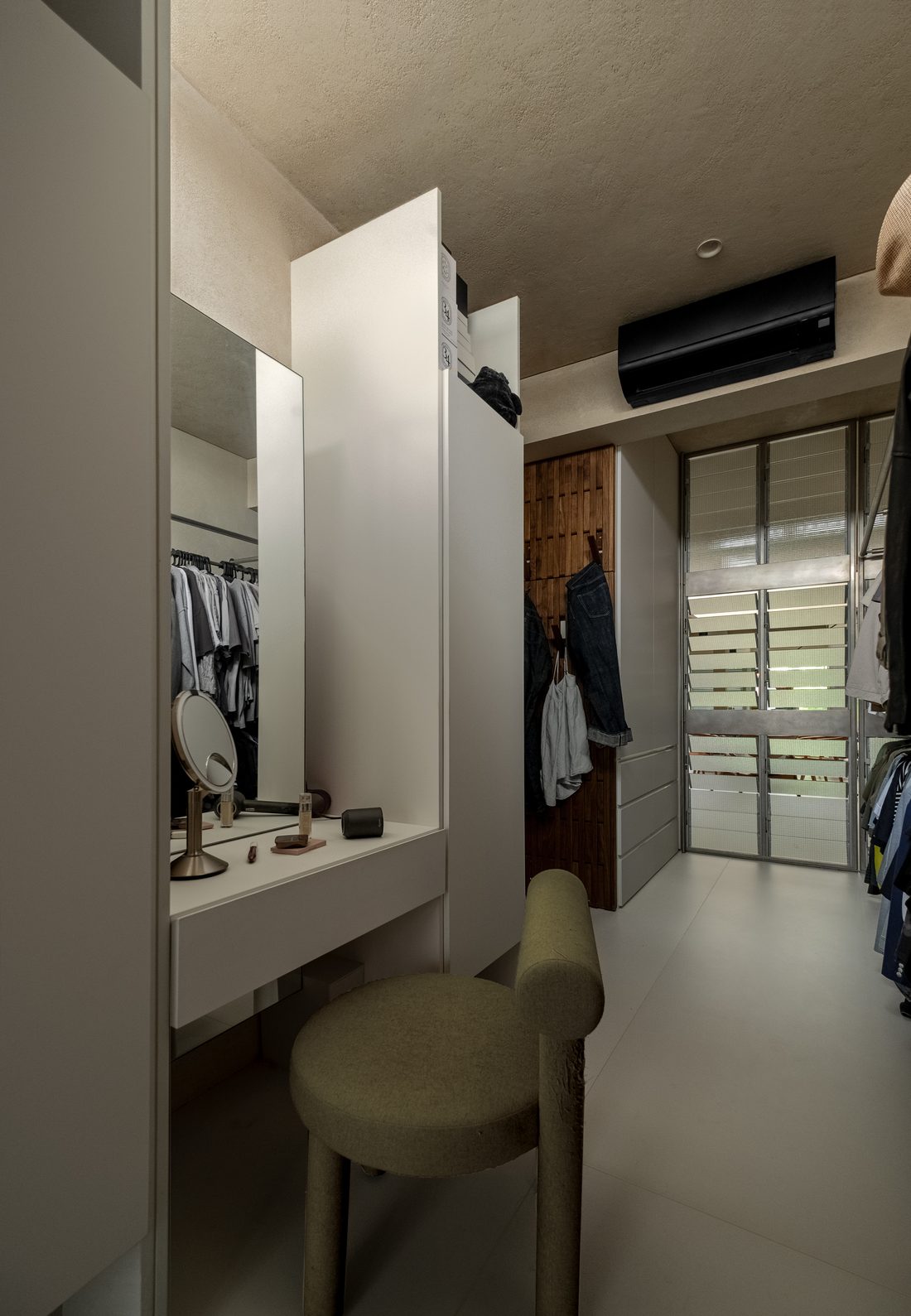
The clients asked us to start with how they actually lived — what they kept, how the morning moved, what the rooms would have to hold. The work below; the rooms that came of it.

the wall
A wardrobe drawing marked up in red pen by the client drawing — the wardrobe, marked up by the client in red
the brief — counted

Bedsheet — 3 sets.
Folded clothes — 4–5 drawers of daily wear, t-shirts and shorts. One drawer for face and body towels.
Luggage — 1 large, 1 medium, 1 small.
Storage — curtains, if applicable (not sure if curtains apply in this house, or blinds better).
Others — if space for a small ladder would be ideal. Optional.

— from the client's annotations on the wardrobe drawing, 2025.
A 3D render of the living and dining, before the room was built render — the room, drawn before it was built
The front elevation studied in SketchUp, perforated screens examined elevation — the facade studied, screen by screen
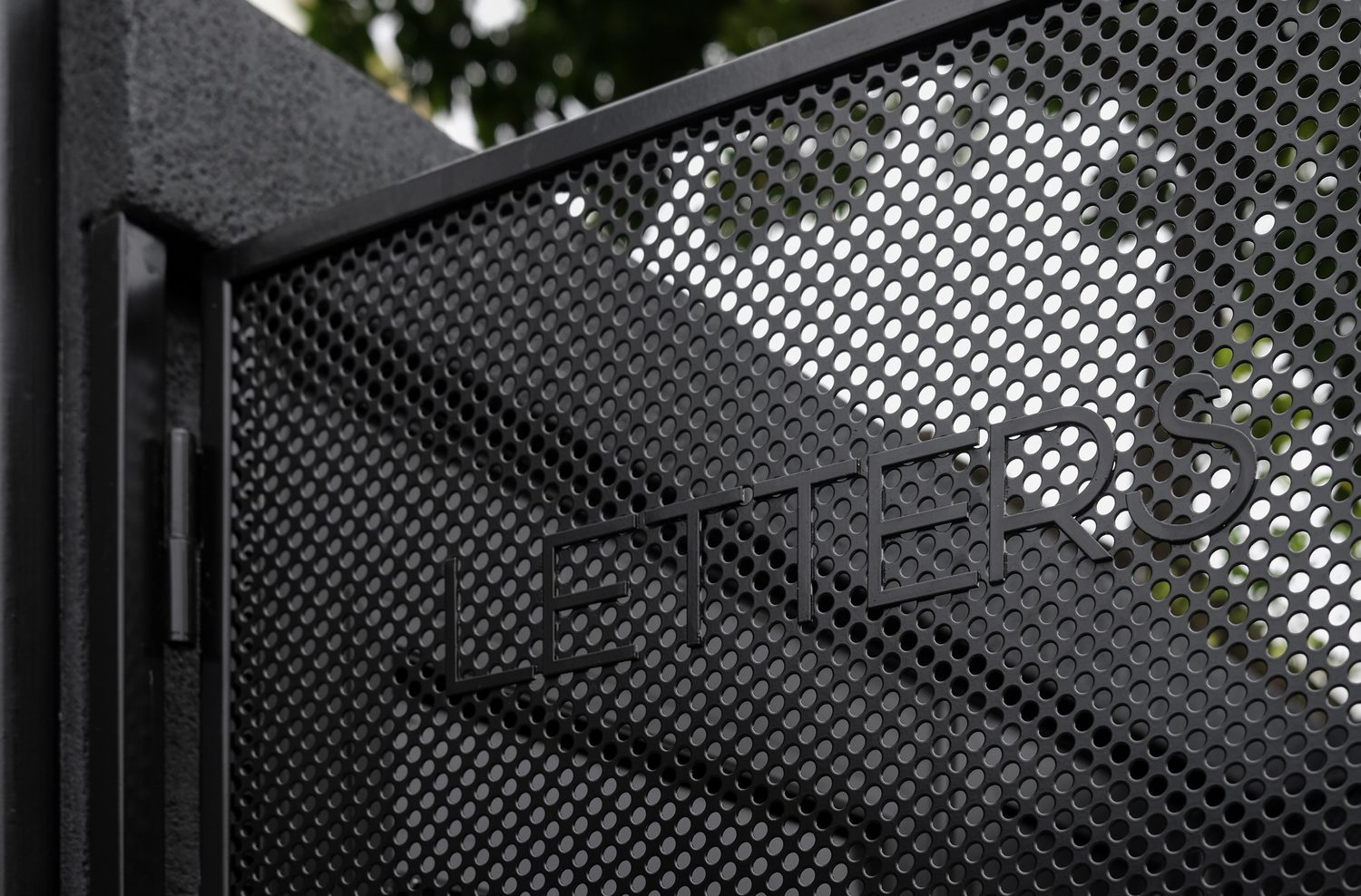
A detail drawing of the main gate at 1:25, perforated metal in two diameters detail — the gate, every dimension agreed on paper before the metal was cut
the rooms
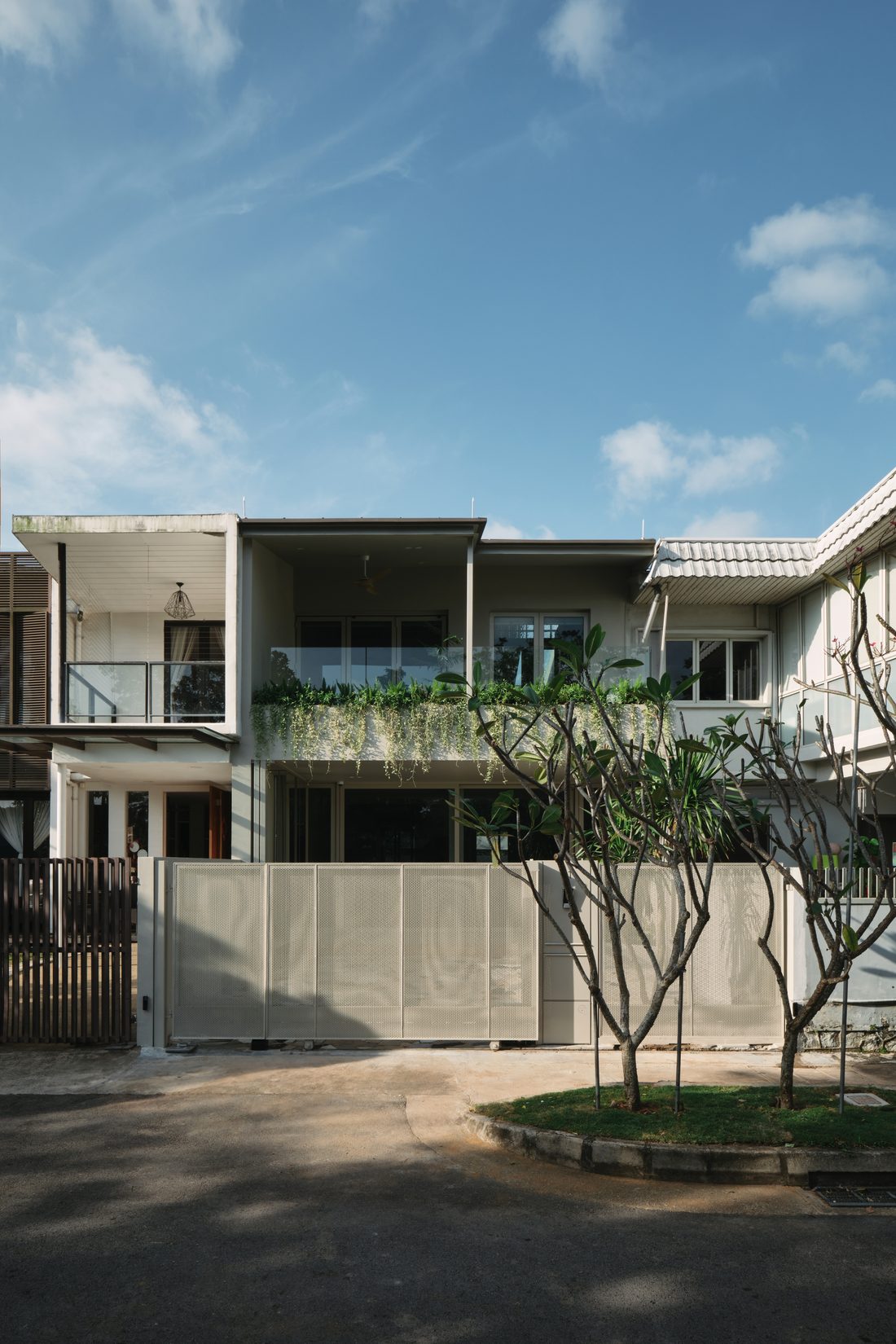
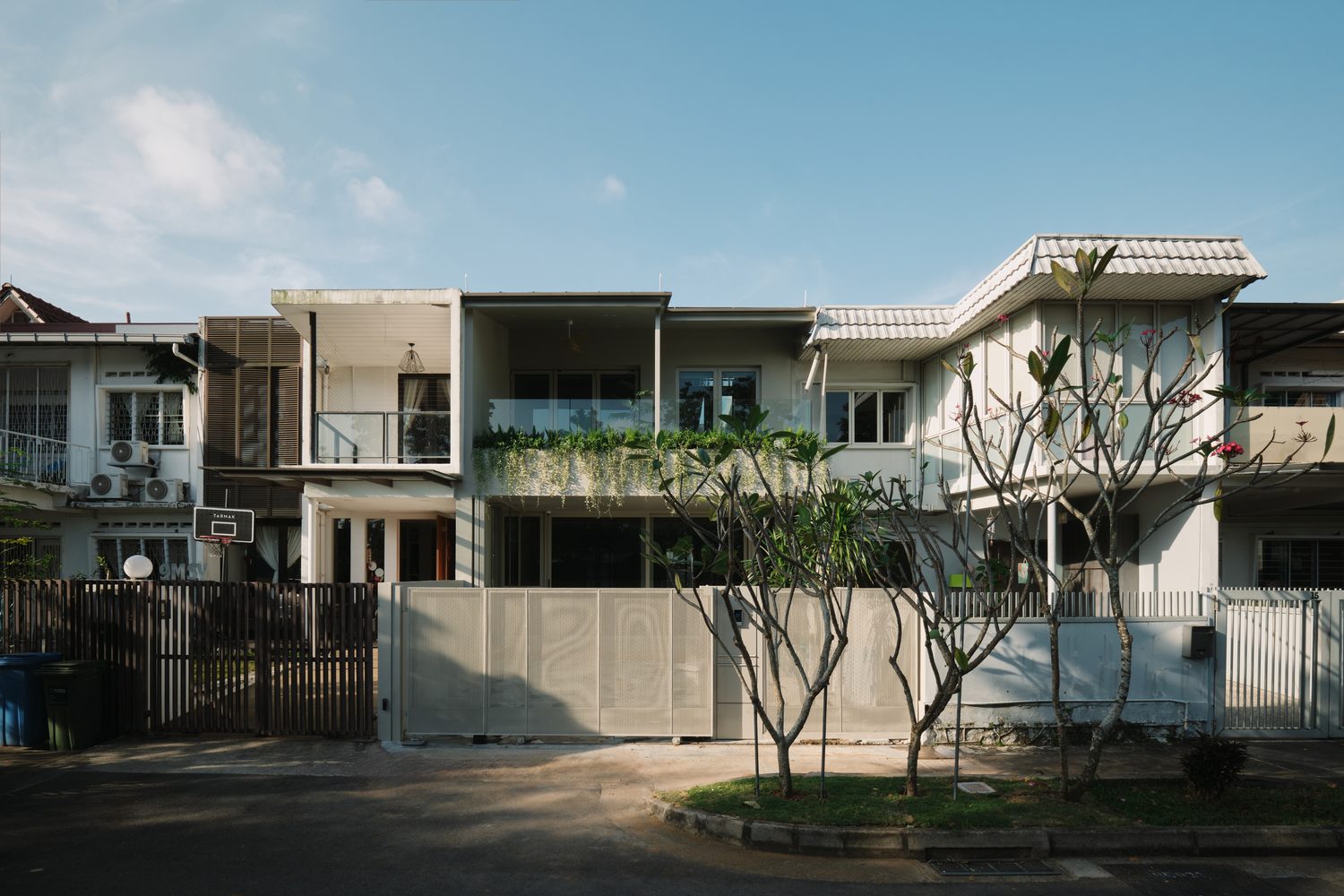
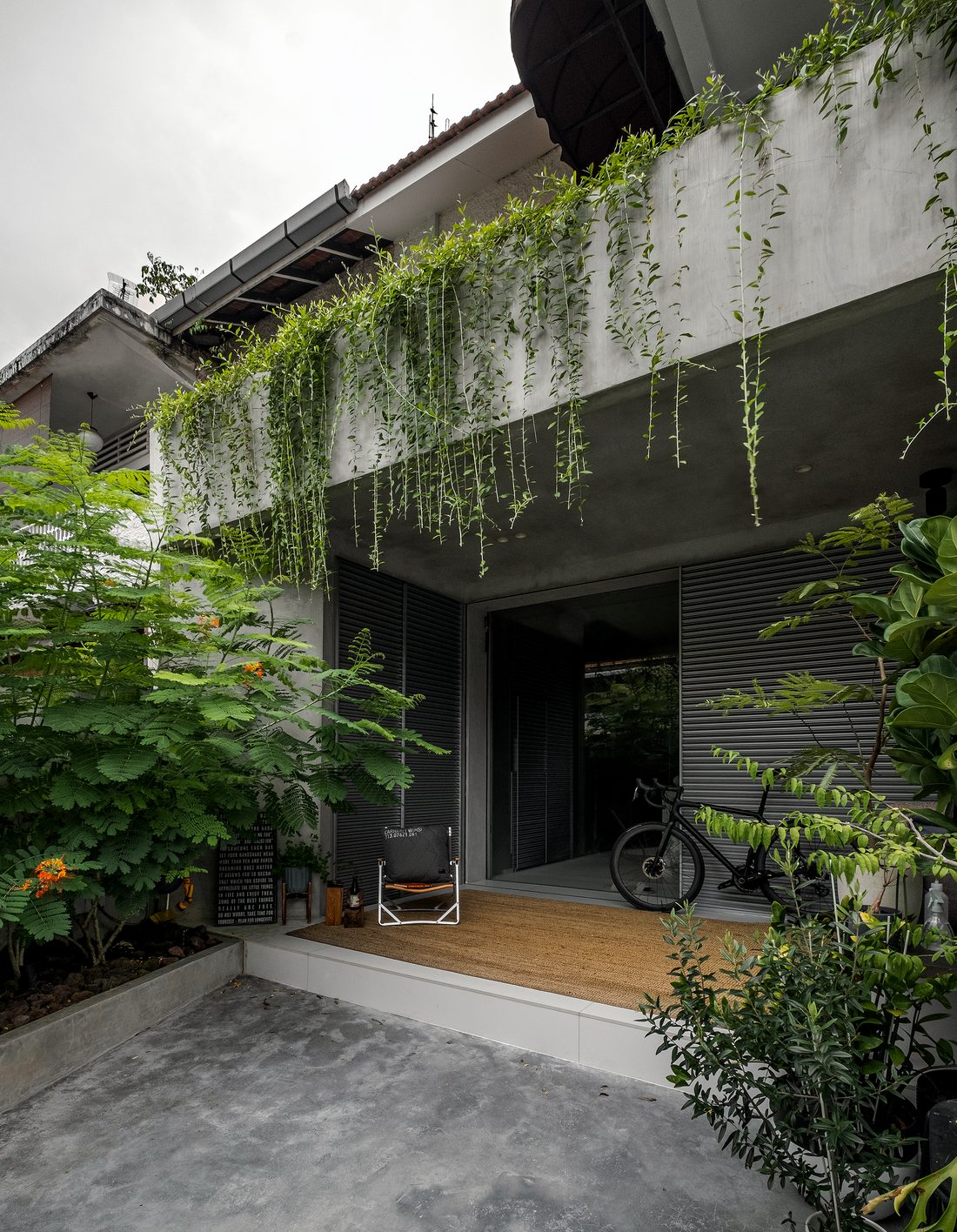
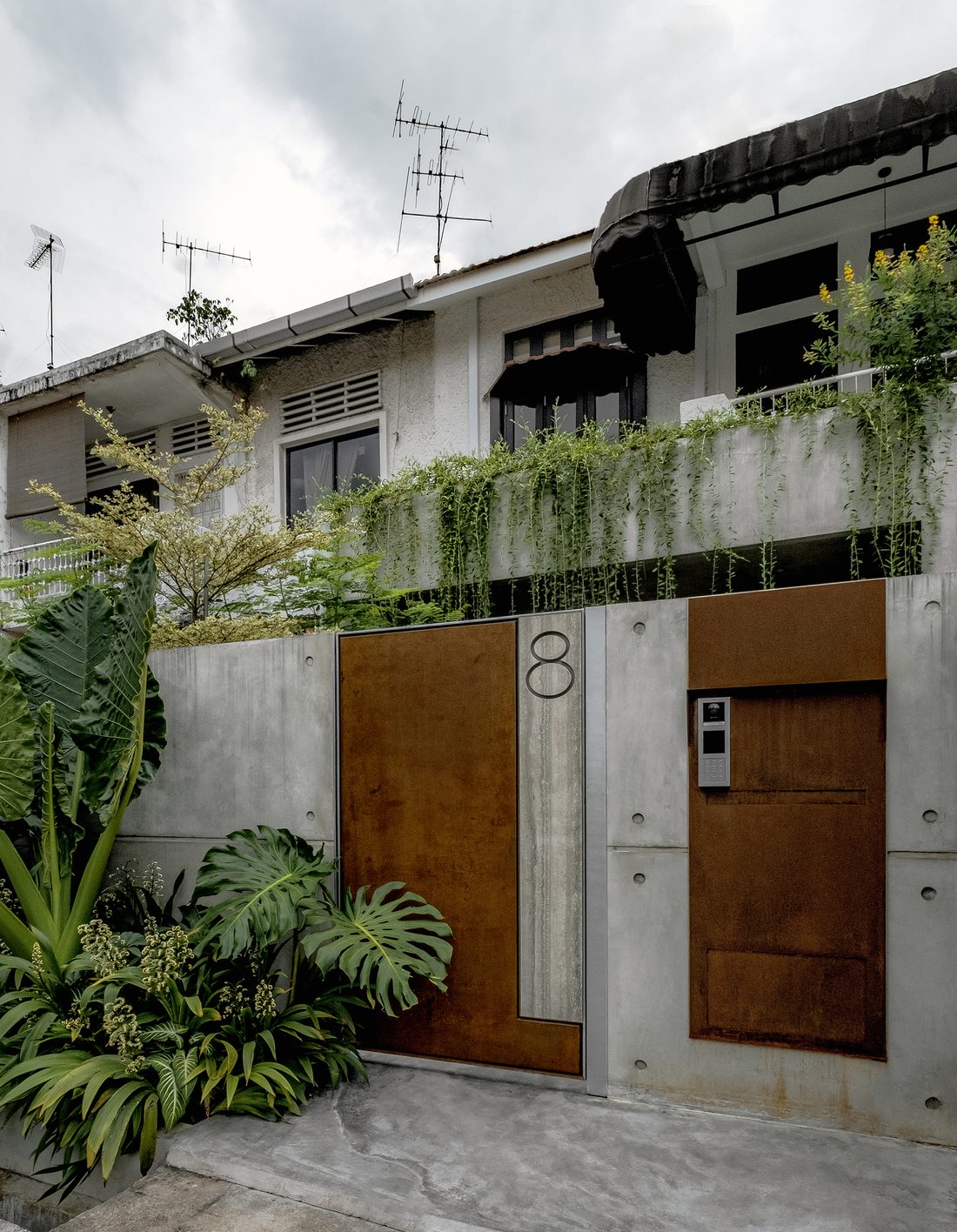
The front of the house, the perforated metal gate closed in afternoon light The gate — perforated, measured, made.
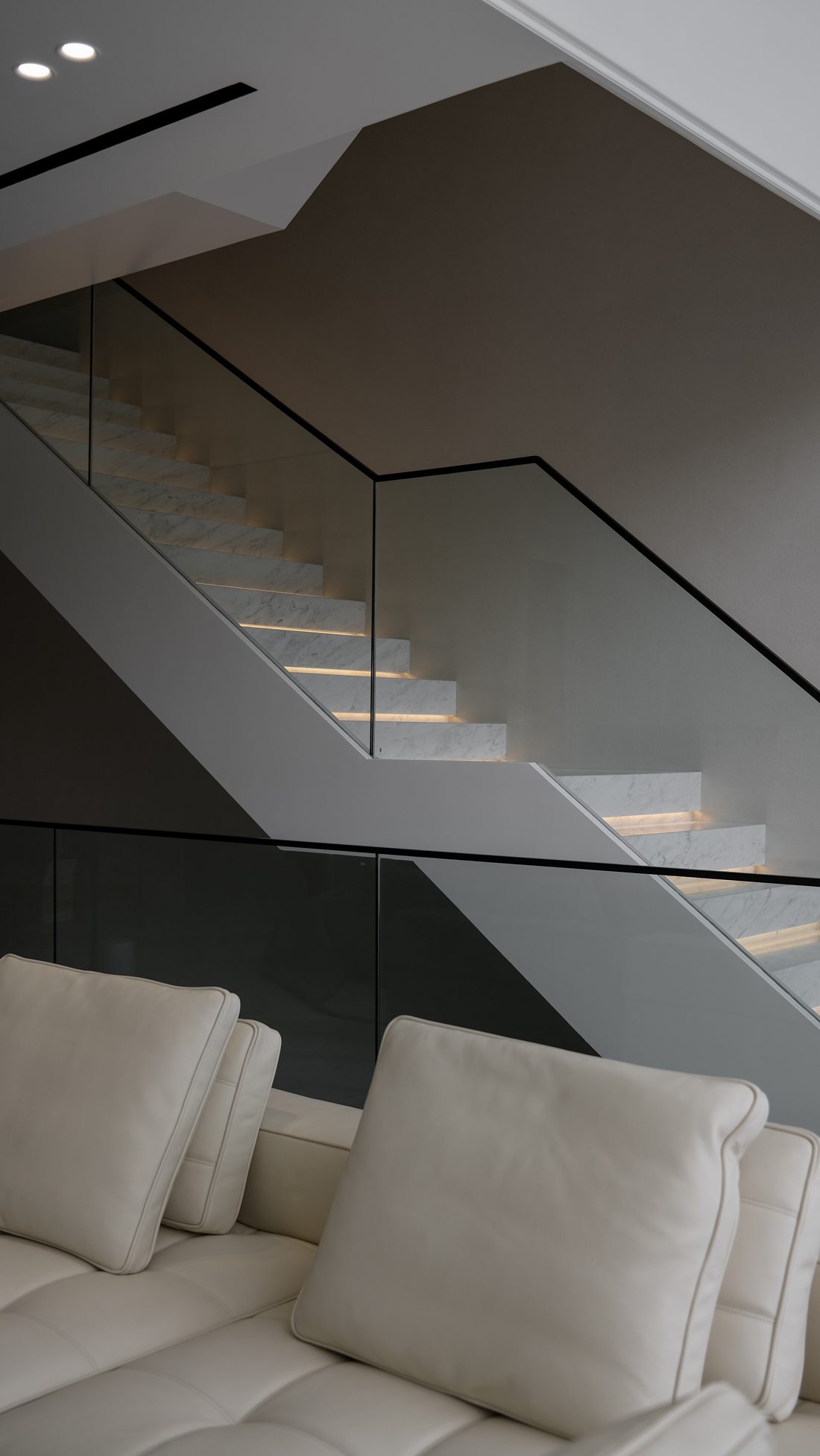
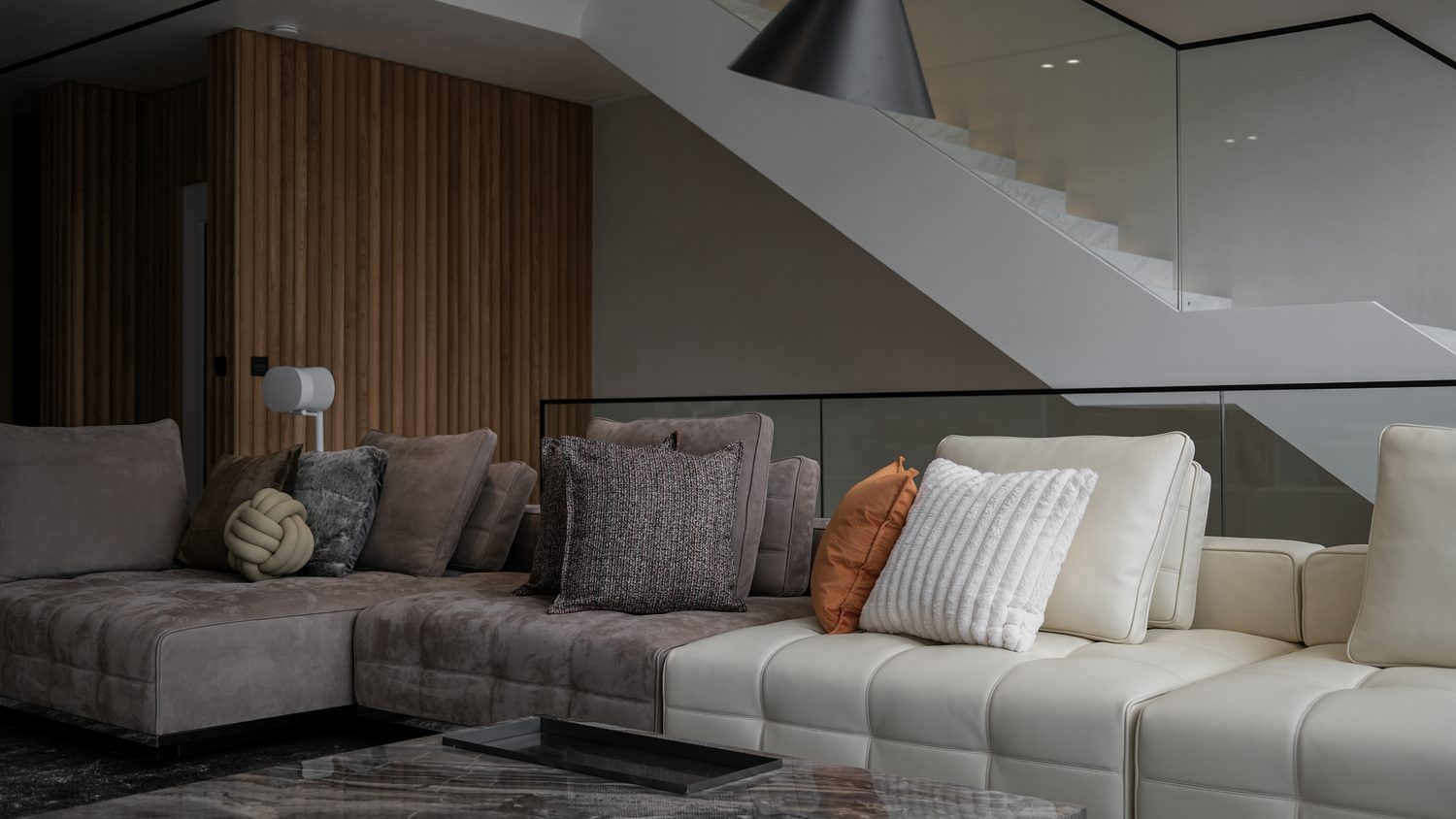
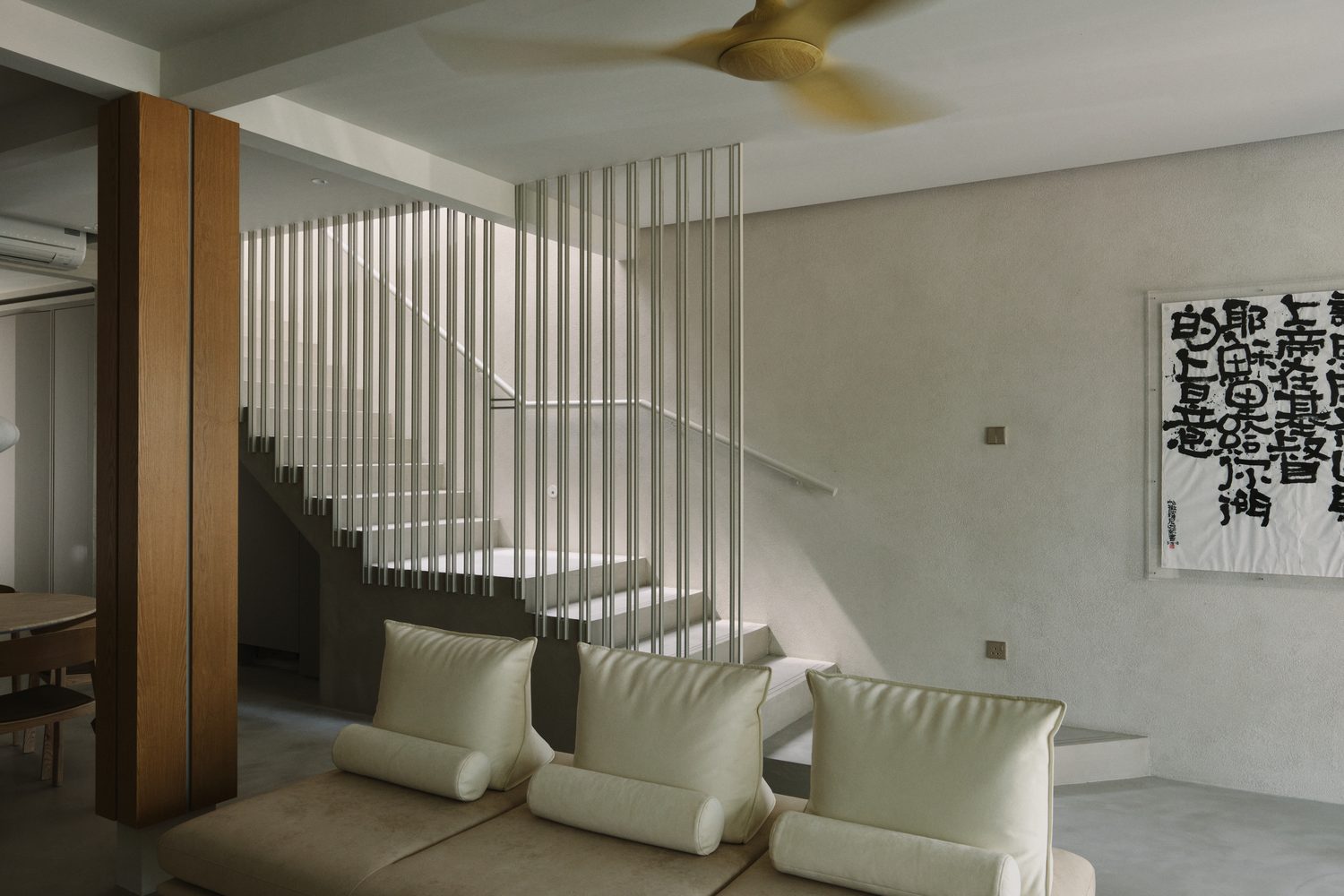
The dining room and stair, suspended rod balustrade catching light The room — built around the day. The stair, hung in light.
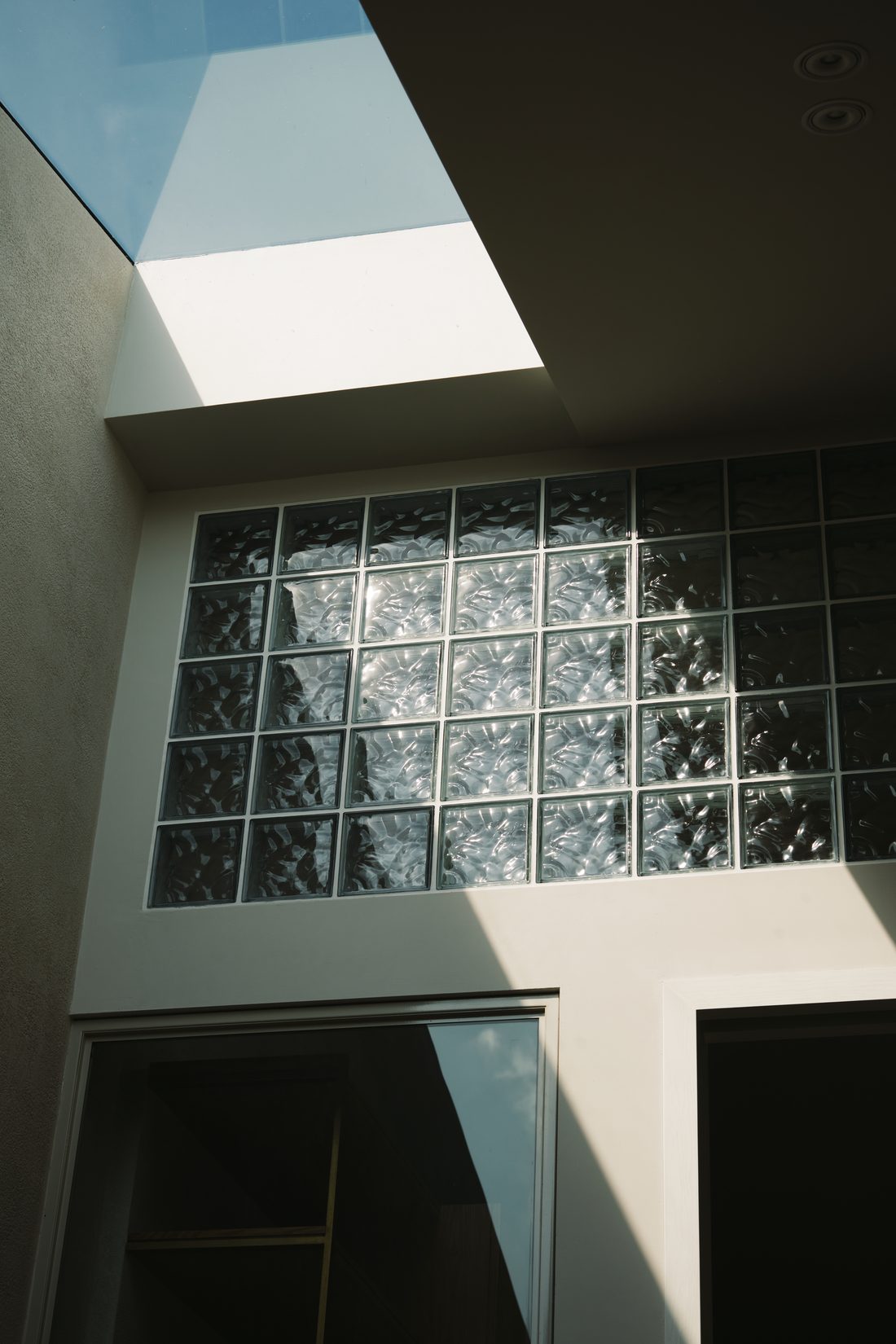
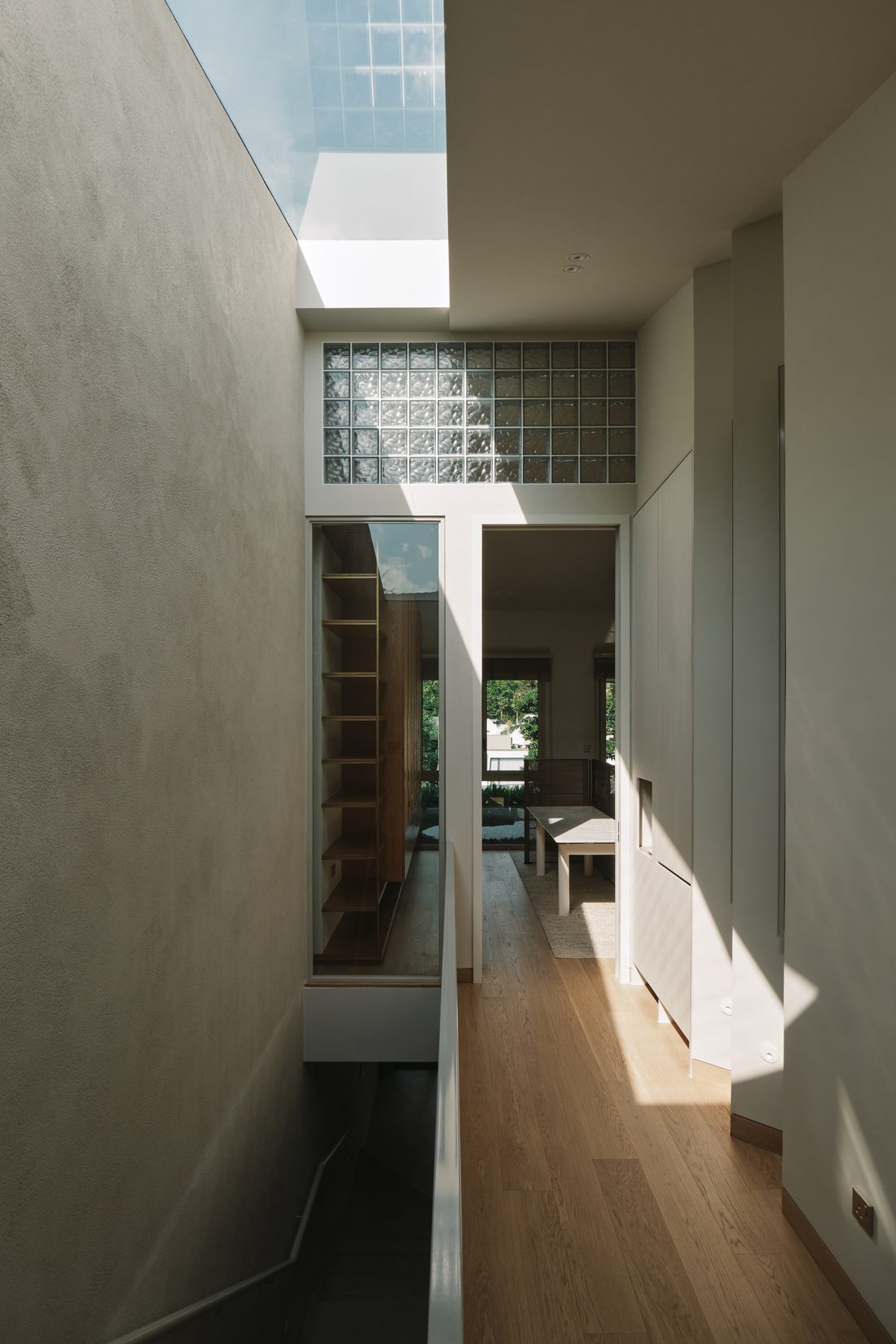
A skylight above a glass block wall, light moving through the blocks The skylight — for the light, not the view.
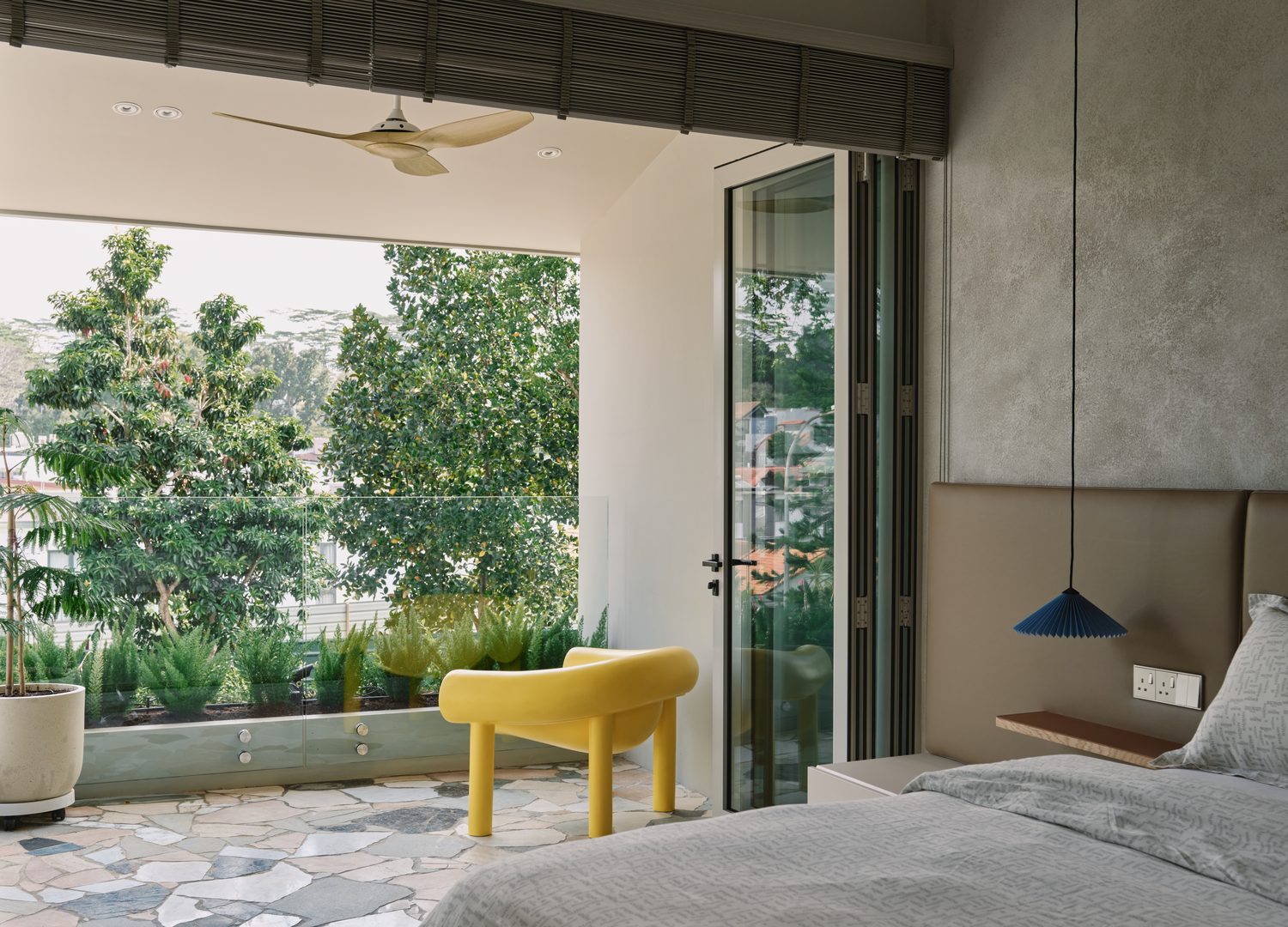
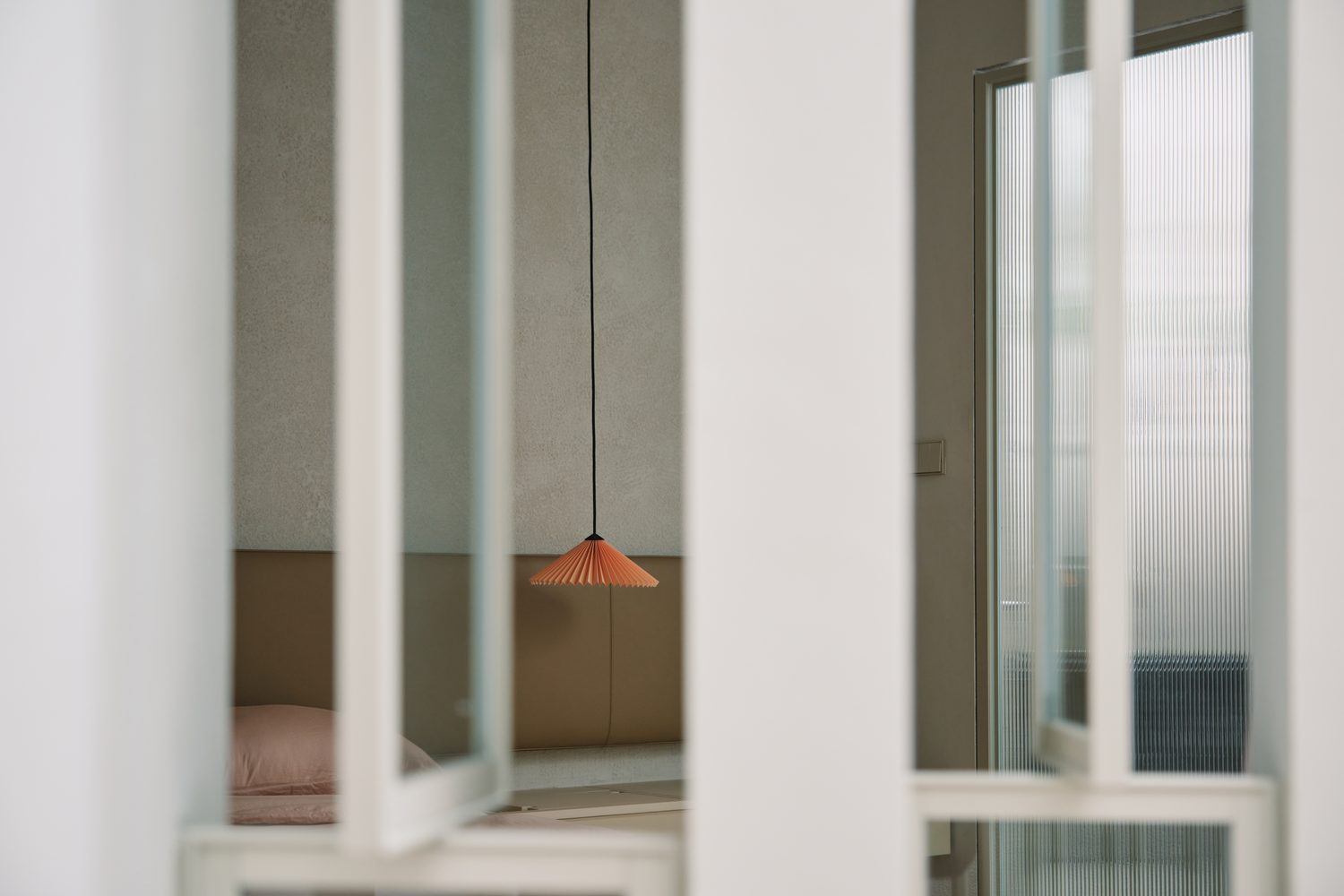
A bedside shelf in oak and leather, a pleated blue pendant above The bedside — leather on oak, for one hand at night.
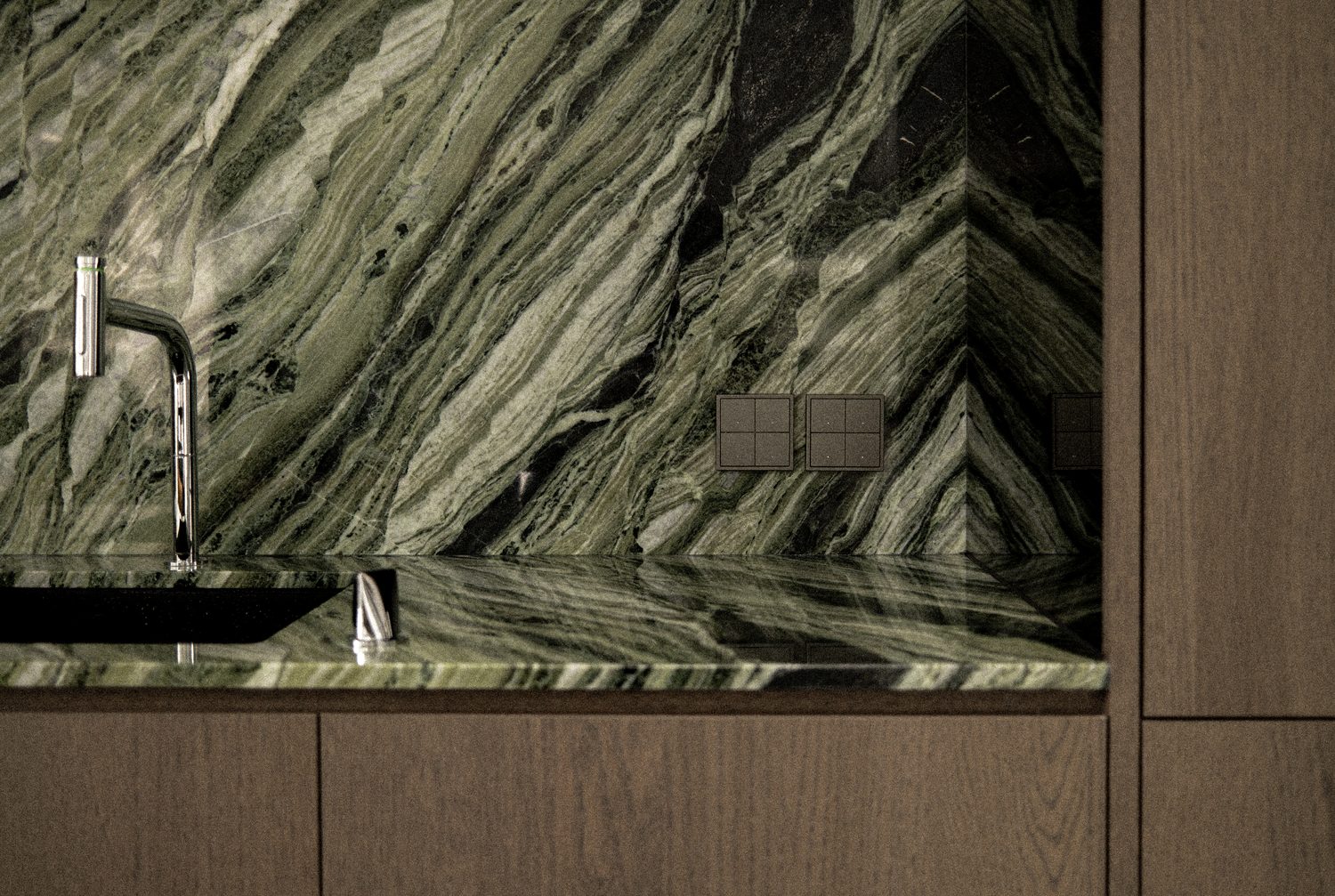
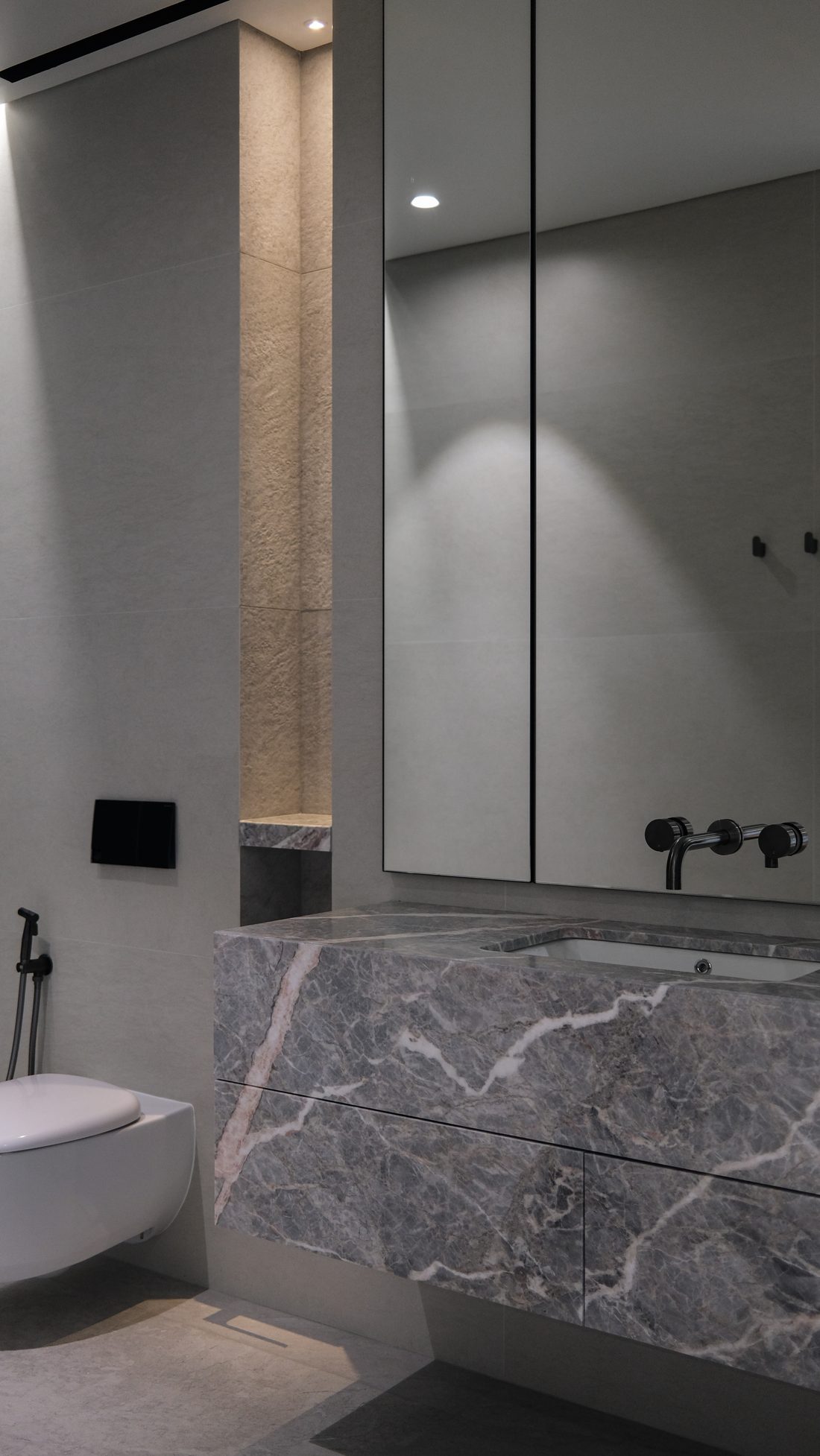
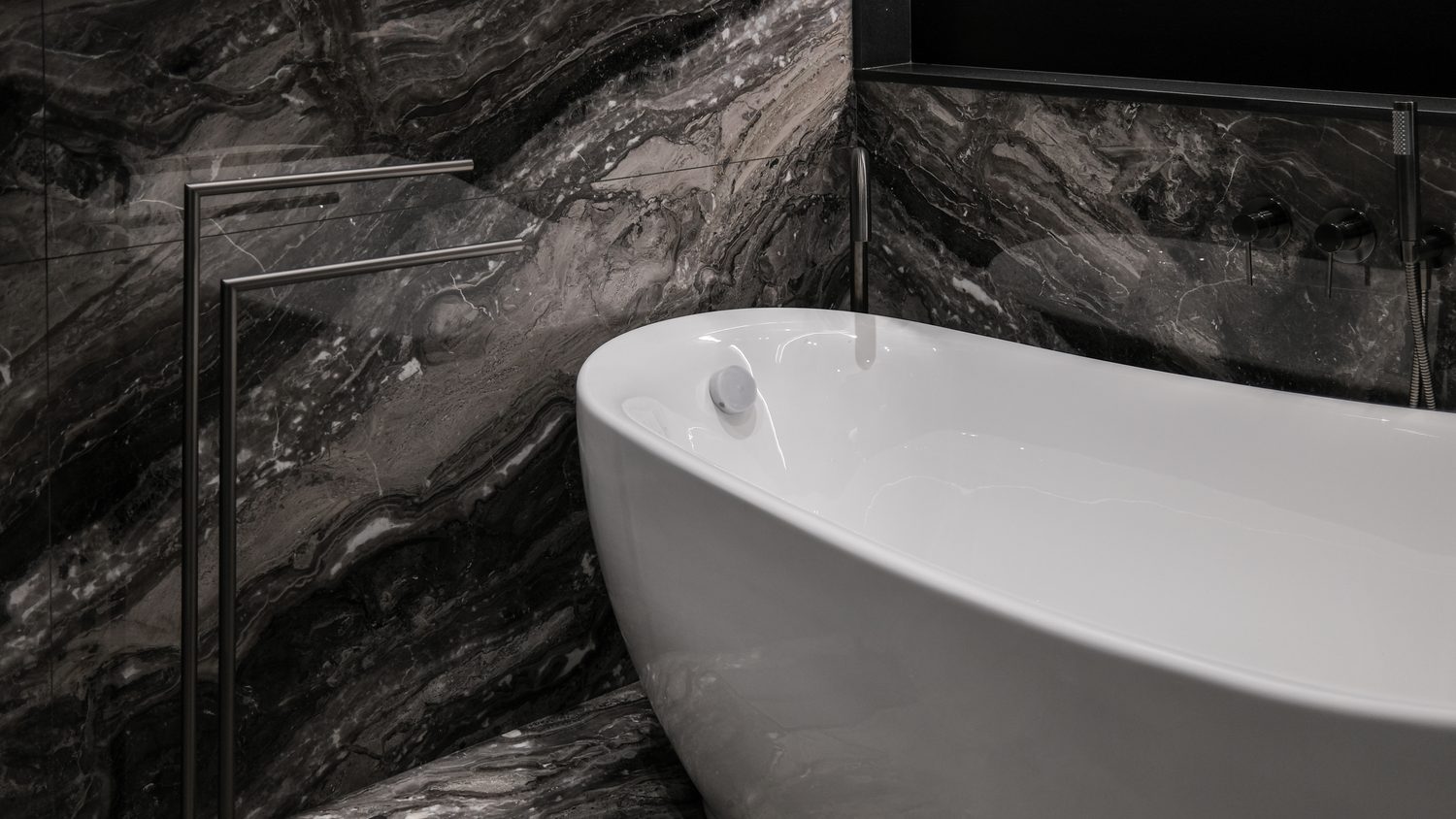
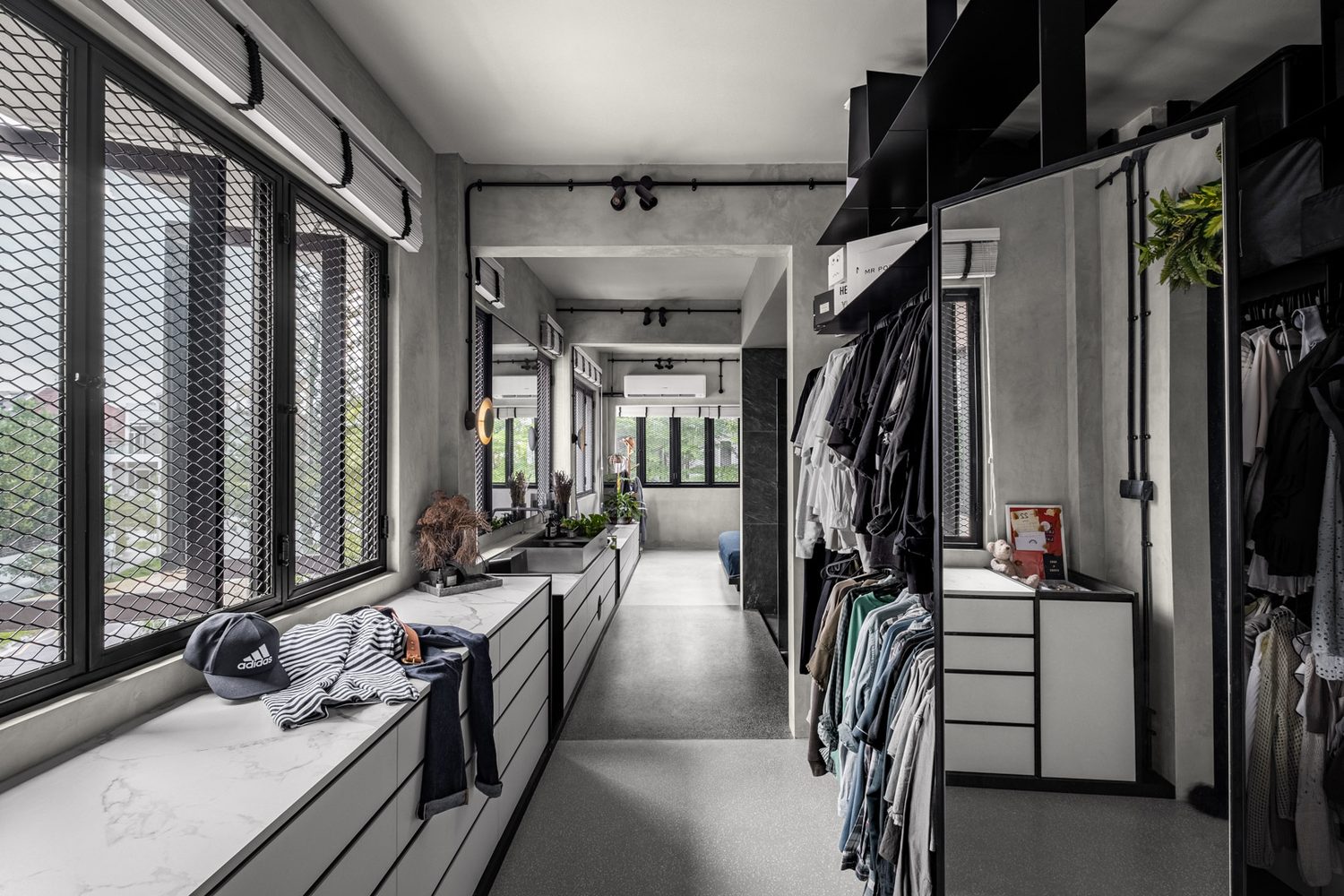
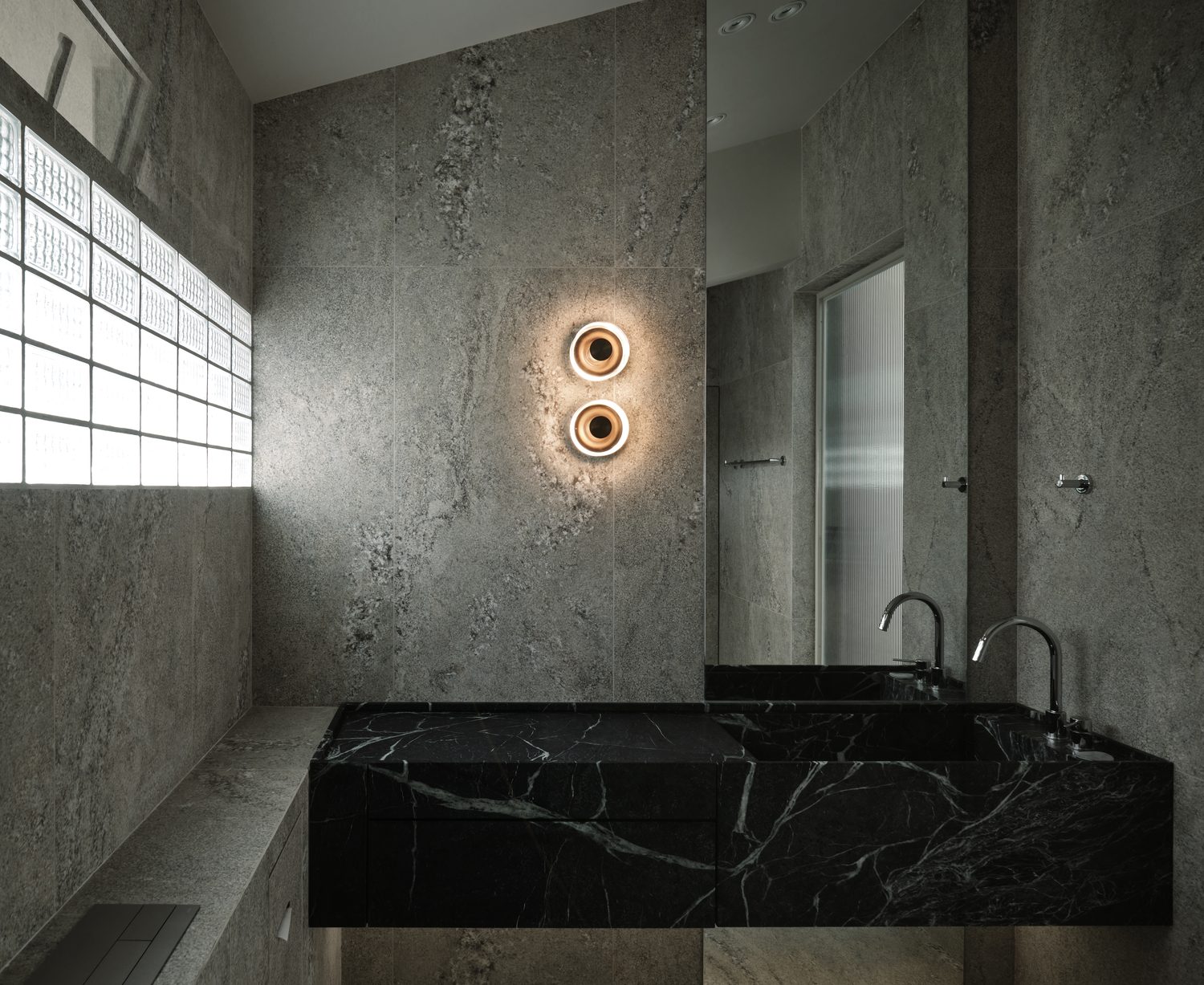
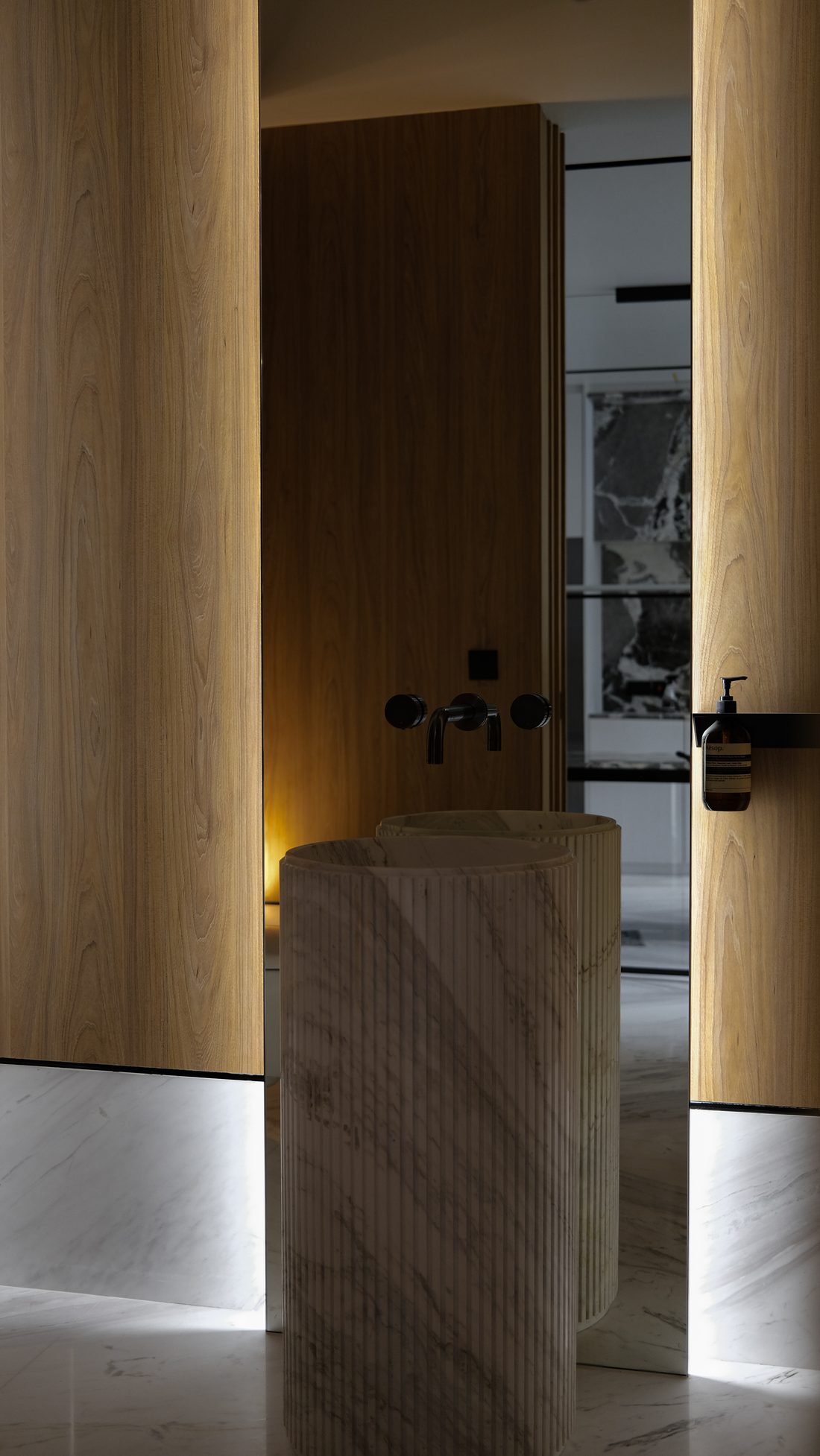
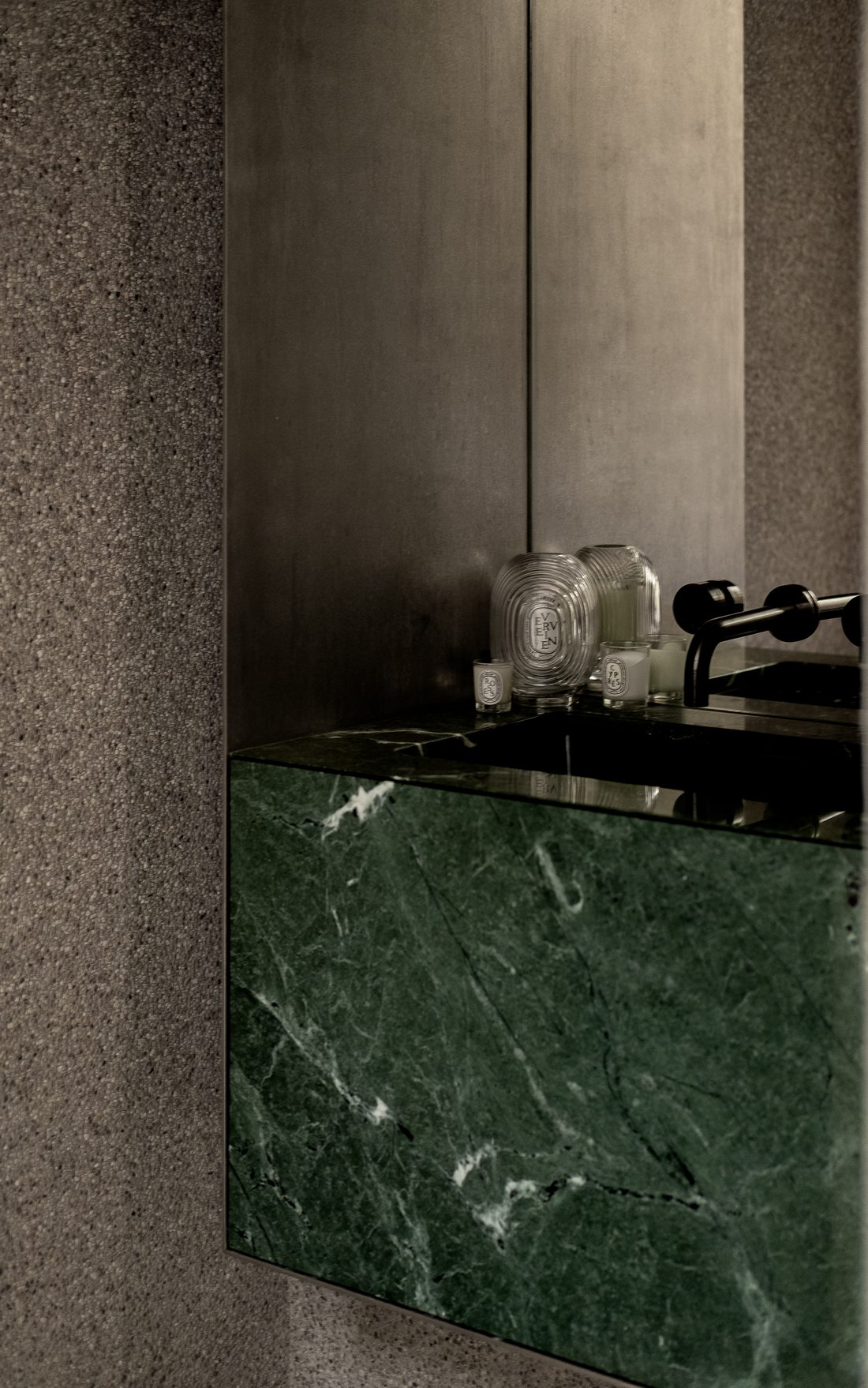
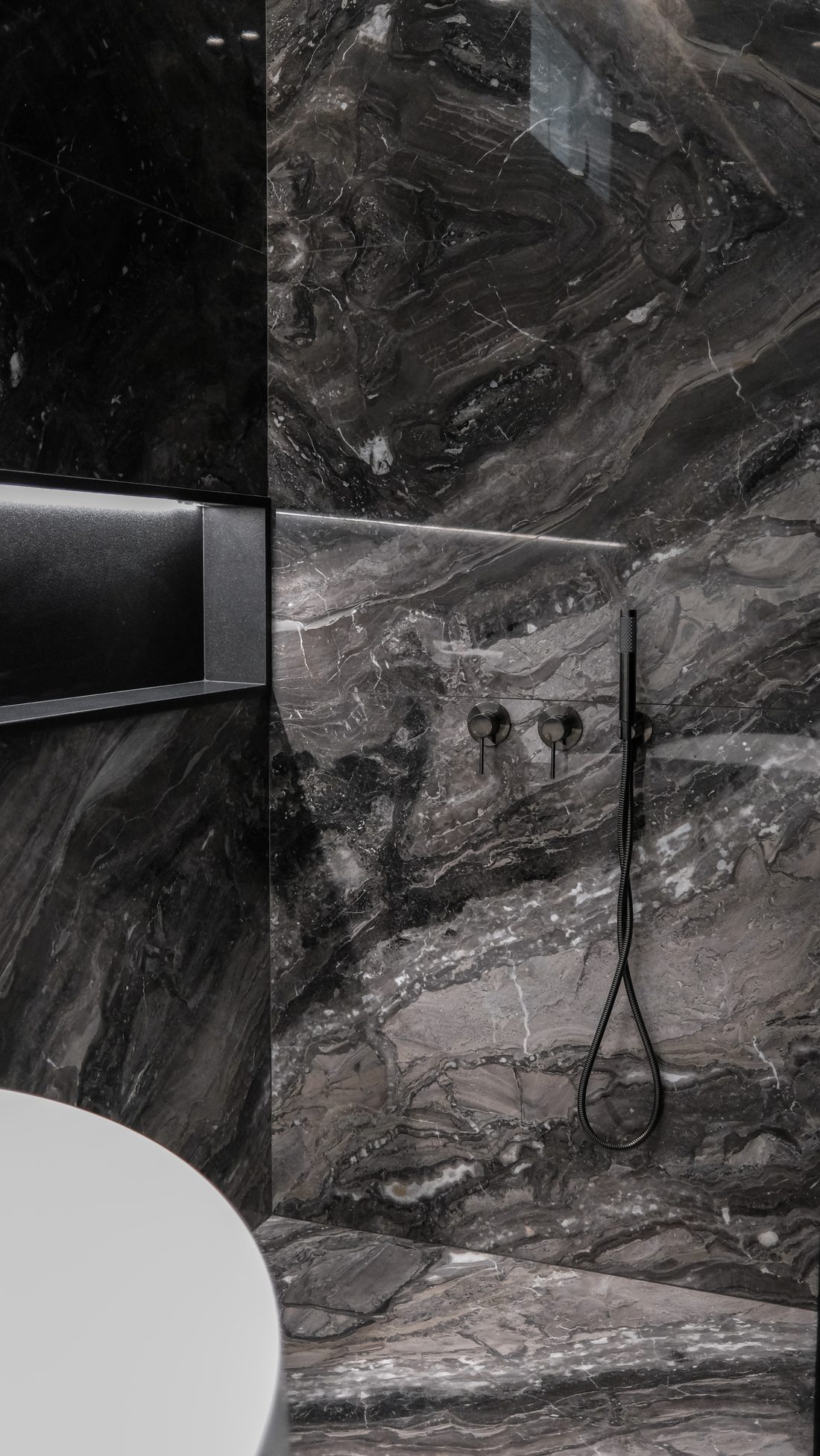
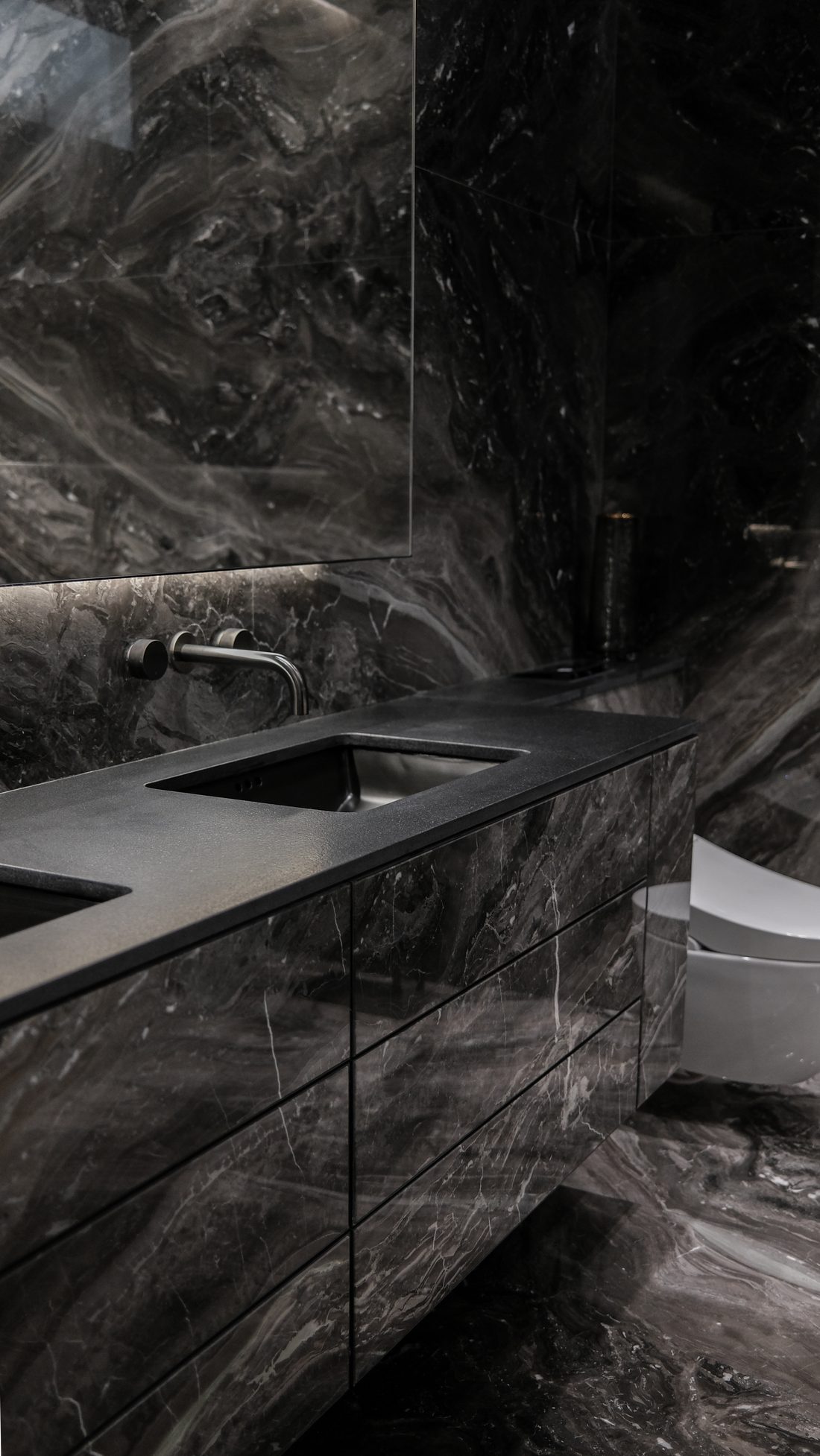
The master bathroom — black marble vanity against grey stone walls The vanity — black marble against grey stone.
made from
lime plaster white oak travertine perforated steel glass block